No products in the cart.
A reversing vehicle on a busy site can become a serious hazard in seconds. If you have ever wondered what is banksman, the short answer is this: a banksman is the trained person who guides drivers and plant operators safely when visibility is limited, space is tight, or pedestrians and machinery are working close together.
In construction, warehousing, logistics and other high-risk workplaces, that role is far more than waving an arm and pointing where to go. A banksman helps prevent collisions, protects workers on foot, and supports safer movement of vehicles, cranes and heavy plant. For anyone looking to work in site safety, improve workplace compliance or strengthen their employability, it is a role worth understanding properly.
What is a banksman?
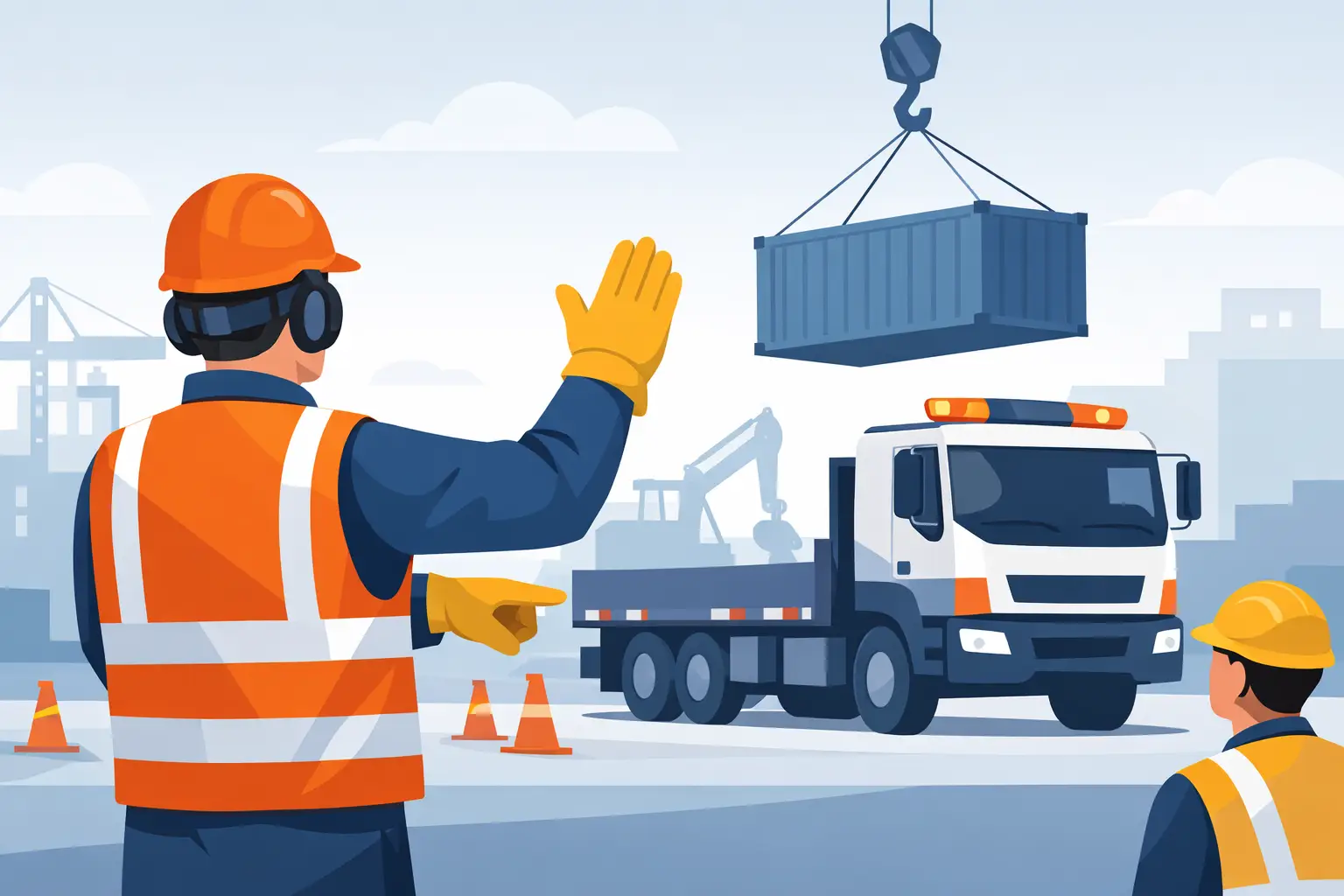
A banksman is a competent person who directs the movement of vehicles or machinery using agreed hand signals, verbal instructions or other communication methods. Their job is to help drivers and operators manoeuvre safely, especially where blind spots, reversing, restricted access or nearby workers create extra risk.
You will often hear the term on construction sites, but the role is not limited to construction. Banksmen may also be used in factories, loading bays, roadworks, waste management sites, ports and any workplace where moving plant and pedestrians share the same environment.
The role is closely linked with traffic management and site safety. In practice, a banksman acts as the operator’s eyes where the operator cannot see clearly. That makes trust, training and consistency essential. A driver should only follow a banksman’s signals when it is clear who is in control and what those signals mean.
What does a banksman do on site?
The main duty of a banksman is to guide vehicle and plant movement safely, but the day-to-day work can vary depending on the site and the type of machinery involved.
On a typical site, a banksman may supervise reversing lorries, direct forklifts in loading areas, assist excavator or dumper movements, and help keep pedestrians away from danger zones. They may also check that the route is clear before movement begins, watch for changing ground conditions, and stop work immediately if something becomes unsafe.
This is one of the reasons the role matters so much. A banksman is not just reacting to movement. They are constantly assessing the space, spotting hazards and helping everyone around them stay aware.
In some settings, the banksman may also support lifting operations, although that depends on their training and responsibilities. On many sites, lifting duties are assigned separately to a signaller or slinger signaller. That distinction matters, because employers should not assume one qualification automatically covers every task involving plant, vehicles and lifting equipment.
Why banksmen are important for workplace safety
Vehicle movement is one of the most common causes of serious workplace incidents. Reversing accidents, crush injuries and struck-by incidents remain a major concern across construction and industrial environments. The risk increases where noise, poor weather, uneven ground, tight corners or multiple contractors are involved.
A trained banksman reduces that risk by creating a clear point of control. Instead of drivers guessing distances or relying on partial visibility, they receive direct guidance from someone positioned to see the wider picture.
That has practical benefits beyond compliance. It can reduce delays, prevent damage to equipment, improve traffic flow and support a more organised site. Safer operations are usually more efficient operations too.
There is a limit, though. A banksman does not remove all risk on their own. Safe systems of work still depend on good planning, proper segregation of vehicles and pedestrians, suitable signage, site rules and competent operators. A banksman is part of the control system, not a substitute for it.
The skills a good banksman needs
A strong banksman needs more than basic awareness. The role calls for concentration, confidence and clear communication, especially in fast-moving environments.
Situational awareness is one of the most important skills. A banksman must keep track of the vehicle, the driver, nearby workers, changing site conditions and any obstacles that could affect movement. Missing one detail can create a serious risk.
Communication matters just as much. Signals need to be clear, consistent and understood by the operator. If there is confusion, the safest response is to stop movement and re-establish control. A hesitant or unclear instruction can be as dangerous as no instruction at all.
Good judgement is also essential. Banksmen must know when to halt work, when visibility is too poor to continue, and when extra control measures are needed. That might include barriers, radio communication, improved lighting or a revised route.
Because the role carries responsibility, employers typically look for workers who are reliable, alert and comfortable following site procedures. For learners aiming to improve their job prospects, these are valuable qualities to develop alongside formal training.
Banksman hand signals and communication
Most banksmen use standard hand signals to direct movement. These signals help create consistency across sites and reduce the chance of misunderstanding. Depending on the workplace, communication may also involve radios, whistles or direct verbal instruction.
The key point is not simply knowing a set of signals, but using an agreed system that both parties understand before the task starts. If the operator loses sight of the banksman, movement should usually stop. If more than one person starts giving directions, confusion can follow quickly.
This is where training becomes important. Standardised instruction helps workers recognise the correct signals for stop, reverse, move forward, turn and slow down. It also teaches when signalling is not enough and a safer alternative is needed.
PPE can support visibility as well. High-visibility clothing, safety boots, helmets and other required equipment help the banksman stay seen and protected while working close to vehicles and machinery.
What training does a banksman need?
There is no one-size-fits-all answer, because training requirements depend on the site, the type of work and employer expectations. That said, banksmen should always be properly trained and assessed as competent for the tasks they are expected to carry out.
A banksman training course typically covers workplace hazards, safe vehicle marshalling, communication methods, standard hand signals, reversing risks, pedestrian safety and the legal responsibilities linked to traffic movement on site. In some sectors, extra modules may be needed for specific plant, lifting operations or high-risk environments.
For many adult learners, online study is a practical way to build that knowledge before moving into site-based work or refreshing existing skills. Flexible training can be especially useful if you are balancing learning with employment, family commitments or a shift pattern. Providers such as Skill Touch support that kind of progress by offering accessible, self-paced learning designed around real-world employability.
Training alone is not the finish line. Competence also depends on supervision, experience and understanding the site rules where the work takes place. A certificate shows learning has happened. Safe performance still depends on applying that learning properly.
Banksman, signaller and marshaller – what is the difference?
These terms are sometimes used interchangeably, but they do not always mean exactly the same thing.
A banksman usually refers to someone guiding vehicle or plant movement safely on site. A marshaller is a broader term that can apply to directing traffic, people or vehicles in controlled areas such as events, depots or airfields. A signaller may refer to someone giving signals during lifting operations or machine movement, often within a more specific operational framework.
On some sites, one person may perform overlapping duties if they have the right training. On others, the roles are kept separate for safety and compliance reasons. That is why jobseekers and employers alike should look carefully at the actual responsibilities listed, not just the title.
Who needs banksman training?
Banksman training is useful for workers who already guide vehicle movements, but it is also relevant for those aiming to move into construction, site support, warehousing, logistics or facilities roles where traffic management is part of the job.
It can benefit labourers stepping into more responsibility, supervisors who need a better understanding of site movement risks, and employers who want to improve team safety standards. For career changers, it can also strengthen a CV by showing awareness of workplace safety and commitment to recognised training.
The value is especially clear in sectors where compliance matters. Employers want people who understand risk, follow procedures and can contribute to a safer working environment from day one.
What employers look for in a banksman
Employers generally want a mix of knowledge, attitude and practical awareness. Training and certification can help open the door, but they also look for someone who can stay calm under pressure, communicate clearly and take safety seriously.
Experience on active sites is often valued, though entry-level learners should not assume they are excluded. If you can show that you understand the role, have completed relevant training and are committed to safe working, you are already in a stronger position than someone relying on guesswork.
For employers managing teams, banksman training can also support wider compliance goals. It helps create a safer culture, reduces preventable incidents and gives staff a clearer understanding of their responsibilities during vehicle and plant operations.
A banksman plays a simple role on paper but an essential one in practice. When heavy vehicles, limited visibility and busy worksites come together, clear guidance can make the difference between a routine manoeuvre and a serious incident. If you are building skills for construction or workplace safety, understanding this role is a smart step towards safer work and stronger opportunities.