No products in the cart.
If you need to define banksman in simple terms, think of the person who keeps vehicle and plant movements safe when the driver cannot see everything clearly. On a busy construction site, warehouse yard or loading area, that role can prevent collisions, injuries and costly mistakes in a matter of seconds.
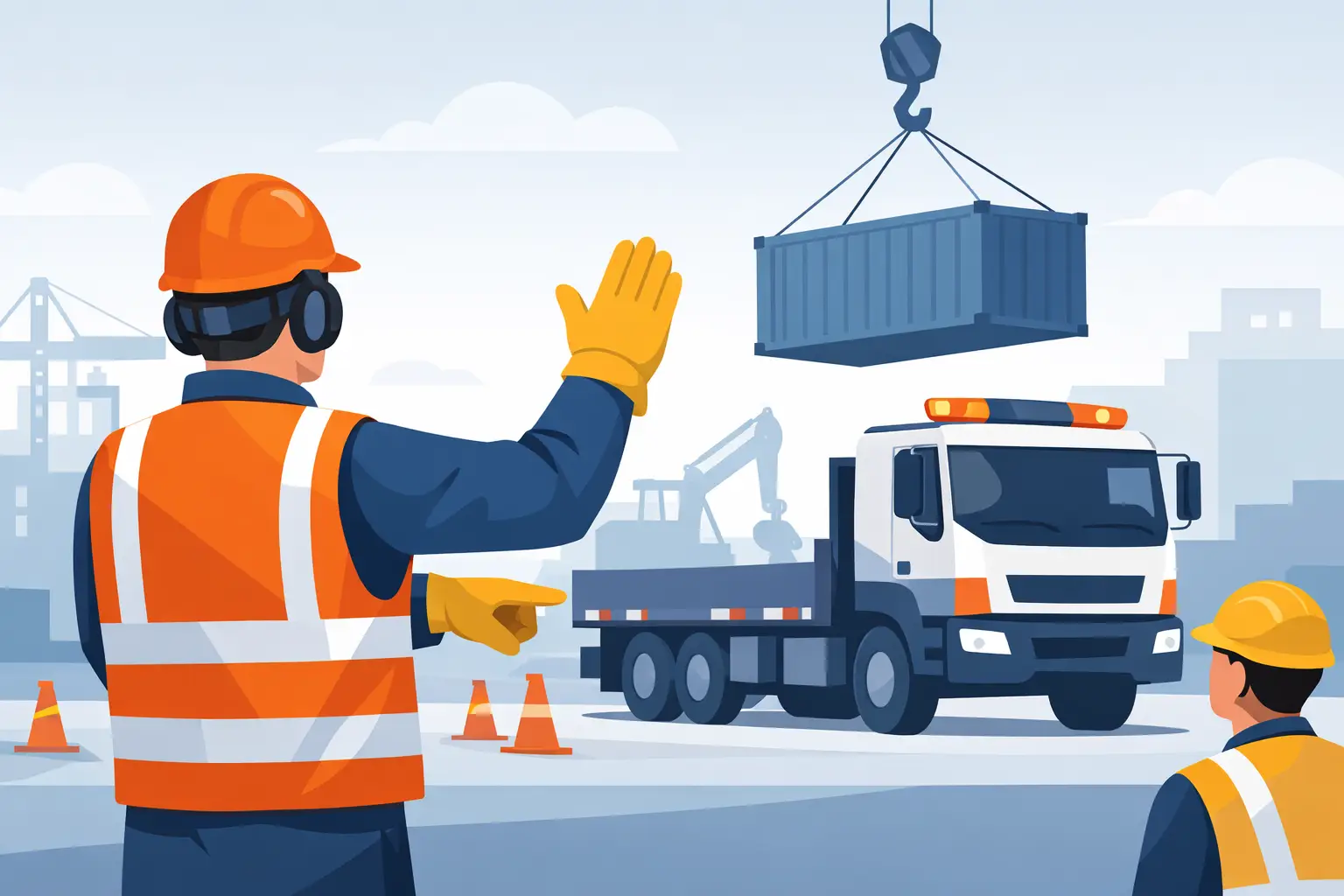
A banksman is a trained person who directs the movement of vehicles, mobile plant or lifting operations by using agreed hand signals, voice instructions or other communication methods. Their job is not just to wave a vehicle backwards. They act as the eyes and judgement on the ground, helping drivers and operators move safely around people, materials, structures and restricted spaces.
In UK workplaces, the term is most often used in construction, logistics, roadworks, civil engineering and any environment where reversing vehicles or moving plant creates risk. You may also hear related titles such as signaller, marshaller or traffic marshal. These roles can overlap, but the exact duties depend on the site, the equipment being used and the employer’s procedures.
What does define banksman mean in practice?
To define banksman properly, you need more than a dictionary description. In practice, a banksman is a safety-critical worker who reduces risk during vehicle and plant movements. They help control one of the most common workplace hazards – people being struck, trapped or crushed by moving machinery.
This matters because drivers of lorries, dumpers, forklifts and excavators often have blind spots, even with mirrors, cameras and sensors. A banksman provides clear instruction so the driver can move only when it is safe to do so. That support is especially important in confined spaces, pedestrian areas, uneven ground and noisy sites where visibility and communication are limited.
The banksman should be clearly visible, properly trained and fully understood by the operator they are guiding. If signals are unclear or if more than one person gives instructions, the risk rises quickly. That is why many employers insist on one trained banksman per manoeuvre, with agreed signals used consistently across the site.
The main duties of a banksman
The central duty of a banksman is to guide movement safely, but the role usually involves far more than hand signalling. A competent banksman checks the route before movement begins, looks for hazards and makes sure the area is clear of pedestrians, obstructions and unstable ground.
They also monitor proximity to buildings, scaffolding, stored materials, overhead services and excavations. If conditions change, they must react immediately. A delivery vehicle reversing into a site entrance may seem routine, but a new skip, a parked van or a group of workers walking behind the vehicle changes the risk level straight away.
A banksman may also be expected to stop work if the manoeuvre becomes unsafe. That authority is important. The role is not about assisting the driver at all costs. It is about controlling movement within safe limits.
Depending on the workplace, the duties can include:
- guiding reversing vehicles and mobile plant
- directing deliveries into loading or unloading areas
- keeping pedestrians out of exclusion zones
- using standard hand signals or radios to communicate clearly
- checking visibility, space and ground conditions before movement
- stopping operations where hazards cannot be controlled
- supporting lifting or plant movements where signalling is needed
Not every banksman will carry out every task. On some sites, banksman duties focus only on reversing vehicles. On others, the role blends with traffic management or lifting support.
Where the role is used
Banksmen are most closely associated with construction, and for good reason. Construction sites are dynamic environments with constant movement, changing layouts and multiple contractors working at once. Vehicles reverse, materials arrive, plant crosses pedestrian routes and visibility is often restricted.
But the role is not limited to construction. Warehouses, ports, manufacturing sites, distribution centres, farms and waste management facilities also rely on trained banksmen or marshals. Any workplace where moving vehicles and people share space can benefit from controlled signalling and route management.
The more complex the environment, the more valuable the role becomes. A quiet yard with marked one-way systems may need less intervention than a congested site with temporary works, uneven surfaces and visiting drivers unfamiliar with the layout.
Why banksmen are so important for safety
Vehicle movement remains one of the biggest causes of serious workplace incidents. Reversing is particularly dangerous because the driver’s field of vision is reduced, even in modern vehicles with safety technology. Cameras and alarms help, but they do not replace human judgement on the ground.
A trained banksman can spot risks that equipment cannot interpret properly. For example, a child near a school delivery point, a worker stepping out from behind stacked materials, or soft ground near an excavation edge all require immediate assessment. Technology may warn about distance, but it does not always understand context.
There is also a wider safety culture benefit. When sites use trained banksmen properly, vehicle movement becomes planned rather than improvised. Drivers know who to follow. Pedestrians know where not to stand. Supervisors can set clear rules. That structure reduces confusion, and less confusion usually means fewer incidents.
Skills a good banksman needs
Technical knowledge matters, but the role also depends heavily on behaviour and judgement. A good banksman stays alert, communicates confidently and does not become casual around familiar tasks.
Observation is one of the most important skills. Hazards can appear quickly, especially on active sites. The banksman must notice people entering the area, changing weather conditions, blind spots, shifting loads and anything that affects safe movement.
Communication is equally critical. Instructions must be simple, visible and agreed in advance. The operator should never have to guess what a signal means. If sight is lost or the message is unclear, the vehicle or plant should stop.
A capable banksman also understands site rules, traffic routes and exclusion zones. They need enough confidence to challenge unsafe behaviour, including from experienced drivers. In safety-critical roles, confidence is not about being loud. It is about being clear and consistent when it matters.
Banksman training and competence
One of the biggest misunderstandings is that anyone on site can act as a banksman. In reality, this role should be carried out by someone who has received suitable training and has been assessed as competent for the environment they work in.
Training usually covers safe signalling methods, blind spots, vehicle hazards, risk awareness, communication procedures, PPE requirements and emergency action. Some courses also explain legal responsibilities and how banksman duties fit into broader site safety systems.
Competence is not just about passing a course once. Employers should also consider experience, supervision and whether the person understands the specific risks of that workplace. Someone trained in a warehouse yard may still need further instruction before directing plant on a construction site.
For learners looking to improve employability or meet workplace requirements, flexible online study can be a useful starting point for understanding core safety principles. Skill Touch supports that kind of practical progress by making accredited learning more accessible around work and family commitments.
Banksman, traffic marshal or signaller?
These terms are often used interchangeably, but they are not always identical. A banksman generally focuses on guiding vehicle or plant movement safely. A traffic marshal may have a wider role in controlling site traffic flow, access points and pedestrian segregation. A signaller can also relate to lifting operations, where communication with a crane operator is part of the task.
The exact title matters less than the defined responsibilities. What matters is whether the worker has the right training, whether signals are standardised and whether everyone on site understands who is in control of the movement.
If an employer uses different job titles but applies the same safety function, the practical expectations may be similar. Even so, workers should not assume the roles are always identical. Site-specific procedures should make this clear.
Common mistakes employers and workers make
One common mistake is treating the role casually. A worker may be asked to guide a vehicle simply because they are nearby, not because they are trained. That creates immediate risk, particularly if the driver assumes the signaler knows the correct procedure.
Another mistake is poor positioning. A banksman must stand where they can see the hazard area and remain visible to the operator. If they move into a blind spot or stand too close to the vehicle, they can place themselves in danger while also reducing control of the manoeuvre.
Mixed signals are another serious problem. Only one person should direct the movement unless a formal multi-person system is in place. Conflicting hand signals, shouted instructions and ad hoc guidance can quickly lead to unsafe actions.
Finally, some sites rely too heavily on technology. Reversing alarms, cameras and sensors are useful, but they are supporting controls, not a complete solution.
When a banksman may not be enough
Using a banksman is helpful, but it is not the only control measure. In some cases, the safer option is to redesign the task so reversing is reduced or avoided altogether. One-way systems, designated delivery times, physical barriers, better lighting and separate pedestrian routes may do more to lower risk than signalling alone.
That is the key point many learners miss. A banksman is part of a wider safety system, not a substitute for proper planning. If the route is too tight, visibility is too poor or pedestrian traffic is uncontrolled, the answer may be to change the environment rather than rely on hand signals.
So, if you want to define banksman accurately, define it as a trained safety role built around control, communication and judgement. On the right site, with the right training, that role can make everyday vehicle movements far safer for everyone involved.