No products in the cart.
On a busy construction site, one unclear hand signal can lead to damaged equipment, delayed work, or a serious accident. That is why understanding the meaning of banksman matters far beyond simple job titles. A banksman plays a key part in keeping vehicle movements, lifting tasks, and site operations safe, controlled, and properly communicated.
For learners exploring construction safety, site operations, or workplace compliance, this is one of those terms worth knowing clearly. It appears often in training, risk assessments, and job descriptions, yet many people only have a vague idea of what it actually means.
What is the meaning of banksman?
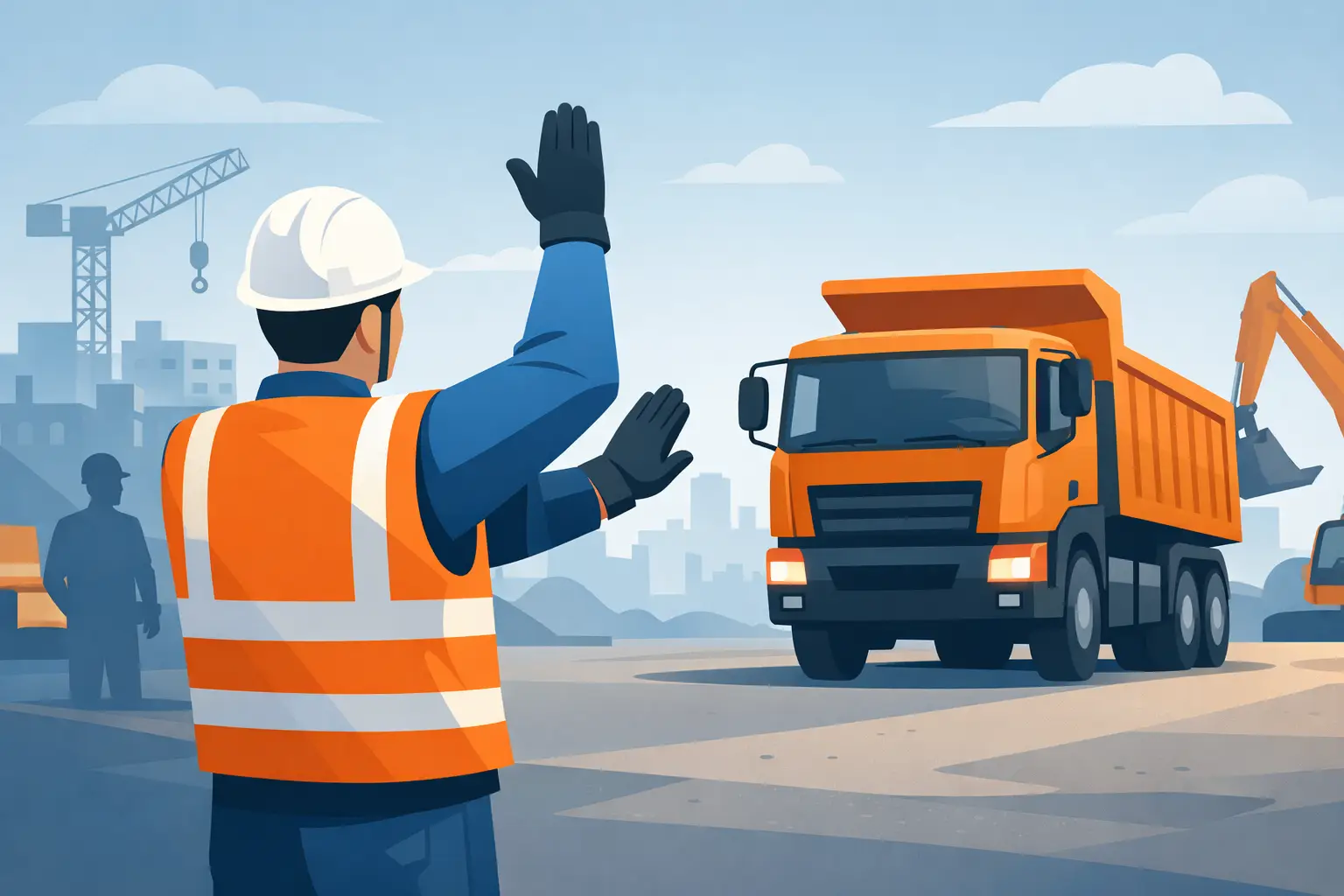
The meaning of banksman is straightforward. A banksman is a trained person responsible for directing the movement of vehicles, plant machinery, or lifting operations in areas where the driver or operator cannot see clearly or needs guidance to work safely.
In practical terms, the banksman acts as the operator’s eyes and ears on the ground. They use recognised hand signals, clear positioning, and site awareness to help manoeuvre reversing vehicles, guide cranes, or manage movement in tight and potentially hazardous spaces.
The role is especially important anywhere visibility is restricted. Construction sites, warehouses, roadworks, demolition projects, and industrial yards all present situations where drivers may not have a full view of pedestrians, obstacles, or site boundaries. A banksman reduces that risk by giving precise instructions and maintaining control of the movement area.
What does a banksman do?
A banksman’s duties depend on the site and task, but the core responsibility stays the same – preventing accidents by directing movement safely. They are not there simply to wave vehicles through. A competent banksman is actively managing risk.
Their work often includes guiding lorries while reversing, directing plant such as dumpers or excavators, assisting with crane or lifting operations, keeping pedestrians out of danger zones, and checking that the route is clear before movement starts. They may also help drivers position vehicles for loading and unloading or support traffic management on sites with limited space.
Communication is a major part of the job. A banksman must use standard signals that operators understand instantly. If signals are unclear, inconsistent, or hidden from view, the system breaks down. That is why training and site-specific briefing are so important.
A good banksman also knows when to stop the operation. If the route is blocked, weather reduces visibility, workers enter the exclusion zone, or communication is lost, the safest instruction may be to halt immediately.
Where the role is commonly used
The term is most strongly associated with construction, but it is not limited to one sector. You will often find banksmen working anywhere moving vehicles and people share the same environment.
On construction sites, they may guide delivery vehicles, telehandlers, cranes, and earth-moving plant. In logistics or warehouse settings, similar duties may apply when large vehicles are manoeuvring around loading bays. On roadworks and civil engineering projects, a banksman may help control movement in confined or high-risk areas. In ports, waste facilities, and manufacturing yards, the same principle applies – one trained person controls movement to reduce the chance of collision or injury.
Job titles can vary. In some workplaces, the role may be described as a vehicle marshal, traffic marshal, plant marshal, slinger signaller, or signaller, depending on the task involved. These roles overlap, but they are not always identical. That distinction matters.
Banksman, traffic marshal, and signaller – are they the same?
This is where confusion often starts. People sometimes use these terms as if they mean exactly the same thing, but the duties can differ.
A banksman usually refers broadly to someone guiding vehicles or machinery safely. A traffic marshal often focuses more specifically on vehicle movement and site traffic control. A signaller or slinger signaller may be involved in lifting operations, especially when directing crane movements and attaching loads.
On some sites, one trained worker may carry out several of these functions. On others, the roles are separate because the risks, equipment, and required competencies are different. The important point is not the label alone but whether the person has the right training for the task they are controlling.
If you are choosing a course or reviewing a job description, always look beyond the title. Check what the role actually involves, what equipment is in use, and what safety standards apply on that site.
Why a banksman is important for safety
Vehicle movement remains one of the most serious hazards in many workplaces. Reversing plant, blind spots, narrow access routes, poor weather, noise, and multiple contractors can all increase the chance of an incident.
A banksman helps reduce those risks by creating a clear line of communication between the operator and the surrounding work area. That does not remove danger completely, but it adds a critical level of control. In many cases, it is the difference between a safe manoeuvre and an avoidable accident.
This role also supports compliance. Employers have legal duties to manage workplace transport risks, provide suitable training, and protect workers and visitors from harm. Using trained banksmen is often part of a wider traffic management and site safety system.
There is a practical benefit as well. Good vehicle guidance improves efficiency. Deliveries are positioned faster, congestion is reduced, and operators can work with greater confidence. Safety and productivity often support each other when the process is managed properly.
Skills a competent banksman needs
Being a banksman is not just about standing in a high-visibility jacket. The role requires concentration, awareness, and confidence under pressure.
A competent banksman needs strong communication skills, because instructions must be clear and immediate. They need good situational awareness to spot changing hazards, moving people, and unsafe conditions. They must understand standard hand signals and know how to position themselves where they are visible to the operator but out of danger.
Judgement matters too. A banksman should know when a manoeuvre can continue, when adjustments are needed, and when the only safe option is to stop. They also need to understand site rules, exclusion zones, pedestrian routes, and the limitations of the equipment being used.
For anyone new to construction or site work, these skills can be learned. That is one reason online training has become a practical route for adults looking to build knowledge flexibly around work and family commitments.
What banksman training usually covers
Training gives learners the foundation they need to understand the role properly. While course content varies, banksman or traffic marshal training usually covers workplace transport hazards, legal responsibilities, reversing risks, blind spots, safe positioning, standard hand signals, communication methods, and emergency procedures.
It may also explain how to assess the movement area, manage pedestrians, use personal protective equipment, and work within a site traffic management plan. Some training includes the limits of the role, which is just as important as the duties themselves. A banksman should never take on tasks they are not trained or authorised to perform.
For employers, training helps create a more consistent safety standard across teams. For individuals, it can support employability by showing awareness of essential site safety practices. For someone looking to move into construction, logistics, or supervisory work, this type of knowledge is practical and immediately relevant.
When a banksman may not be enough on their own
Although the role is valuable, relying on a banksman alone is not always the full answer. Safe vehicle movement should be part of a wider control system.
For example, if a site has poor layout, limited lighting, no marked pedestrian routes, and constant congestion, even a skilled banksman is working against avoidable hazards. The best approach combines trained personnel with good planning, one-way systems where possible, physical barriers, clear signage, maintained equipment, and well-briefed drivers.
There are also situations where technology helps. Cameras, reversing alarms, sensors, and proximity warning systems can improve visibility. Even so, these do not replace the need for human judgement in many environments. Technology supports safe movement, but it does not remove the need for training and competent supervision.
Who should learn about the banksman role?
This topic is useful for more people than you might think. Site operatives, warehouse staff, labourers, supervisors, health and safety learners, and anyone moving into construction management can benefit from understanding the meaning of banksman and how the role works in practice.
It is especially relevant for adults looking to strengthen their CV with practical health and safety knowledge. If you are changing careers, refreshing compliance training, or building towards a role with more responsibility, learning how site movement is controlled can be a smart step.
For employers, it is equally valuable. Staff who understand vehicle marshalling and traffic risks are better prepared to work safely, follow procedures, and support a more efficient site environment.
At its core, the meaning of banksman is about responsibility, communication, and accident prevention. It is a role that protects people, supports compliance, and keeps high-risk workplaces moving safely – and that makes it well worth understanding properly.