No products in the cart.
A single misunderstood hand movement can stop a lift, delay a job, or far worse, cause a serious accident. That is why banksman signals matter so much. On busy sites where noise, distance, blind spots and pressure all compete for attention, clear signals give drivers, plant operators and lifting teams one simple, shared language.
For anyone working in construction, logistics, warehousing or site safety, understanding these signals is not a nice extra. It is a practical skill that supports safer vehicle movement, better communication and stronger compliance. If you are building your knowledge for work, refresher training or a recognised certificate, this is one of those core topics worth getting right.
What are banksman signals?
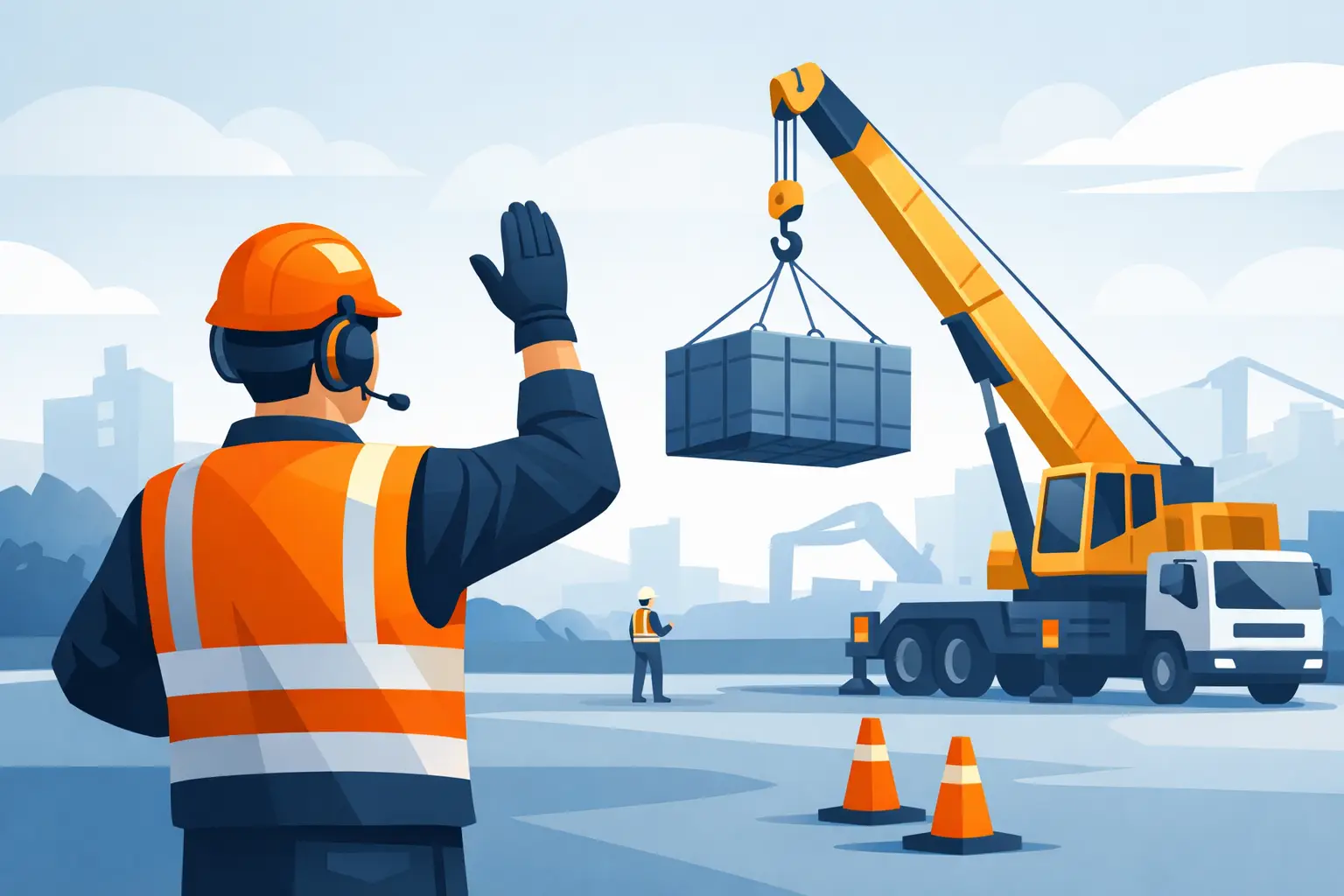
Banksman signals are standard visual instructions used by a trained signaller or banksman to guide the movement of vehicles, cranes or plant equipment. They are used when the operator cannot fully see the path of travel, the load, nearby people or surrounding hazards.
In simple terms, the banksman becomes the operator’s eyes on the ground. Their role is to communicate clear directions such as stop, move forward, reverse, raise, lower, slew, or hold position. On many sites, this can be the difference between controlled movement and avoidable risk.
The exact signals used can vary depending on the task. Reversing a lorry through a tight delivery area is different from directing a crane lift near scaffolding. Even so, the principle stays the same – one trained person gives clear, agreed signals, and the operator responds only to those signals unless there is an emergency.
Why banksman signals are so important on site
Construction and industrial environments rarely offer perfect conditions. Lighting changes, weather reduces visibility, engines create noise, and different trades may be working within a very small area. Verbal instructions can easily be missed or misunderstood. Hand signals cut through that problem because they are direct and visible.
They also support control. When a site has a recognised signalling system, movement becomes more predictable. Operators know what to expect, pedestrians are less likely to enter danger zones, and supervisors can be more confident that tasks are being carried out properly.
There is also a legal and compliance angle. Employers have a duty to reduce risk and provide safe systems of work. That includes planning vehicle movements, lifting operations and site communication methods. A trained banksman is often part of that wider control system, not a stand-alone fix.
That last point matters. Banksman signals are effective, but they do not replace lift plans, exclusion zones, competent operators or proper risk assessments. They work best as part of a broader safety process.
Common banksman signals and what they mean
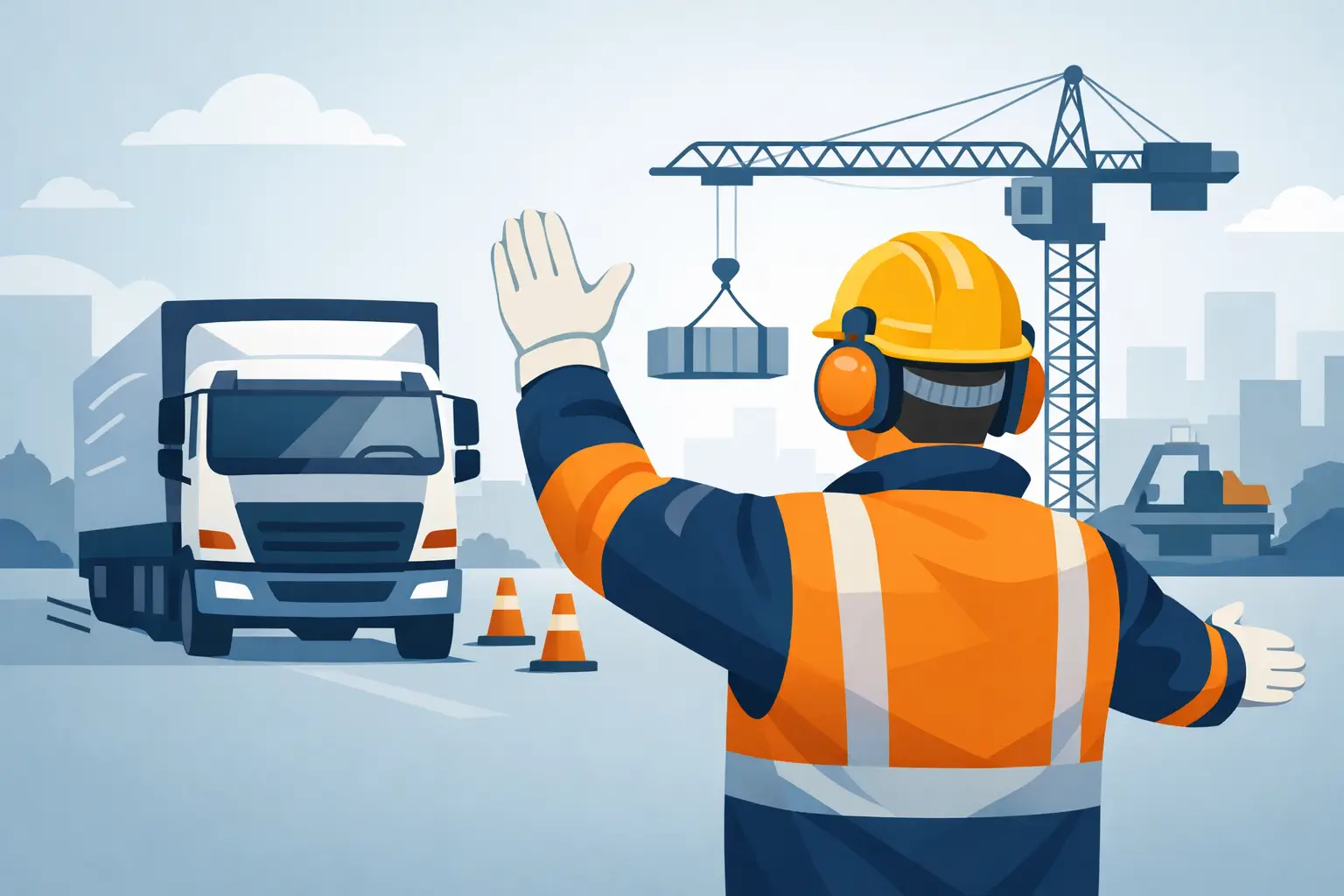
Although training should always cover the exact approved signals used in your workplace, there are several common instructions that appear again and again. The stop signal is the most critical and should be instantly recognisable. It tells the operator to halt movement immediately.
Forward and reverse signals guide travel direction for vehicles or plant. These are especially important in loading areas, near public access routes, and anywhere visibility is restricted. Left and right directional signals help the operator reposition accurately without relying on guesswork.
For lifting operations, the banksman may signal raise, lower, slew left, slew right, extend jib, retract jib, or hoist slowly. In these situations, clarity becomes even more important because loads can swing, drift or strike structures if communication is poor.
Speed control is another area people sometimes overlook. A signal may indicate not just movement, but slow movement. That distinction matters in tight spaces or when precision is needed. A rushed instruction can create a rushed response.
Emergency stop signals should always be understood by everyone involved. If anything looks unsafe, the movement should stop at once. No delivery schedule or site deadline is worth overriding that basic rule.
Who needs to know them?
Banksman signals are most closely associated with banksmen, traffic marshals, slinger signallers and plant safety roles. But in practice, the knowledge should not sit with one person alone. Vehicle drivers, crane operators, forklift operators, site supervisors and managers all benefit from understanding the signalling system used around them.
This wider awareness helps prevent mixed messages. It also supports teamwork. A driver who knows what the banksman is trying to communicate is more likely to respond quickly and correctly. A supervisor who understands the signals is in a stronger position to spot unsafe practice before it leads to an incident.
For learners aiming to improve employability in construction or site operations, this knowledge can also strengthen your CV. Employers value practical safety awareness, especially when it is backed by training.
What makes a good banksman?
A good banksman is not simply someone waving their arms near a reversing vehicle. The role requires training, confidence, concentration and authority. Signals must be clear, deliberate and consistent. The banksman should stand where they can see the hazard area and where the operator can see them easily.
They also need good judgement. If sight is lost, the task should stop. If pedestrians enter the area, the task should stop. If the driver seems unsure, the task should stop. Confidence is useful, but only when it is backed by discipline.
Another key point is visibility. High-visibility clothing, safe positioning and attention to site layout all support effective signalling. A trained banksman should never stand in a danger zone simply to maintain eye contact.
Communication skills matter as well. On some tasks, hand signals are supported by radios or pre-task briefings. Before movement begins, everyone should know who is giving instructions, what signals will be used, and what to do if communication breaks down.
Where mistakes happen
Most signalling mistakes are not dramatic. They are small, common and preventable. One of the biggest is having more than one person trying to direct the operator. That creates confusion instantly.
Another issue is inconsistency. If a site uses informal or improvised gestures instead of recognised signals, workers may interpret them differently. What one person thinks means slow down, another may read as keep coming.
Positioning errors are also common. If the banksman stands where the operator cannot maintain a clear view, communication is weakened. If they stand too close to moving equipment, they put themselves at risk.
There is also the problem of complacency. Teams that work together every day sometimes rely on habit rather than proper signalling. Familiarity can create shortcuts, and shortcuts tend to appear just before incidents do.
Fatigue and poor weather can play a part too. Rain, low sun, darkness and noise all affect how signals are given and received. That is why a safe system should adapt to conditions rather than assume every task can be handled in the same way.
Banksman signals and online learning
For many adult learners, fitting training around work and family is the main challenge. Safety knowledge still needs to be current, but attending in-person sessions is not always practical. That is where flexible online study can help.
A good course can explain the purpose of banksman signals, the legal context, the responsibilities of signallers and operators, and the common hazards linked to vehicle movement and lifting tasks. It can also help learners understand why standardisation matters and how signalling fits into wider site safety procedures.
Online learning is especially useful for refreshers, awareness training and compliance support. It gives learners the chance to revisit key points at their own pace, which is often helpful for visual subjects where accuracy matters. For employers, it can also be a practical way to support team training without causing major disruption to operations.
Skill Touch reflects that flexible approach by making recognised learning more accessible for busy professionals who want to strengthen their knowledge and improve workplace confidence.
What to look for in training
Not all safety training has the same value. If you are choosing a course, look for clear coverage of recognised hand signals, the role of the banksman, communication procedures, risk awareness and the limits of signalling as a control measure.
It should also explain real-world application. Knowing a signal on paper is one thing. Understanding when to stop a task, where to stand, how to respond to blind spots, and how to avoid mixed instructions is what makes the learning useful.
If your role involves cranes, lifting operations or complex vehicle movement, you may need more specialised training beyond basic awareness. That is worth checking before enrolling, especially if your employer expects a specific competence level.
Why this knowledge supports career progress
Health and safety knowledge is often seen as mandatory rather than valuable, but that misses the point. On many sites, the people who understand procedures properly are the people trusted with more responsibility. They are also the people better placed to move into supervisory or specialist roles.
Learning banksman signals can support safer day-to-day work, but it also shows employers that you take competence seriously. Whether you are entering construction, changing career, or refreshing your qualifications, practical site safety knowledge remains one of the clearest ways to improve your credibility.
When signals are clear, movement is safer, teams work with more confidence, and small mistakes are less likely to become serious ones. That is exactly why this topic deserves proper attention.