No products in the cart.
Fresh artificial nails can look flawless on day one, then suddenly start lifting, chipping or growing out faster than expected. If you are wondering how long do artificial nails last, the honest answer is that it depends on the type of nails, how well they were applied, and how you treat them afterwards.
For most people, artificial nails last anywhere from a few days to three weeks before they need attention. Some options are ideal for a weekend event, while others are designed to stay in place through work, daily tasks and regular wear. Knowing the difference matters, especially if you are considering nail services as a skill, a side hustle or part of a beauty career.
How long do artificial nails last on average?
Artificial nails do not all perform the same way. Press-on nails usually last the shortest time, often between a few days and one week. Gel nail extensions can last around two to three weeks, while acrylic nails often last two to three weeks before needing an infill. Dip powder nails tend to sit in a similar range, usually up to three weeks when properly applied.
That timing refers to how long they remain presentable and secure, not how long you should leave them untouched. Even if they still look acceptable, natural nail growth creates a gap at the base, which can affect both appearance and balance. The longer artificial nails are left without maintenance, the more likely they are to catch, lift or place pressure on the natural nail underneath.
What affects how long artificial nails last?
The product itself matters, but wear time is also shaped by everyday habits and the quality of the application. A rushed prep stage, poor curing, or the wrong product for the client’s nail type can shorten lifespan considerably.
Natural nail condition is one of the biggest factors. Oily nail plates can make adhesion harder. Weak, peeling or damaged nails may not hold extensions as well as healthy nails. If someone has a habit of picking, biting or using their nails as tools, even a strong set may not last as long as expected.
Lifestyle also plays a part. Frequent handwashing, cleaning products, swimming, manual work and exposure to heat can all reduce wear time. Someone working in an office may get longer from a set than someone in healthcare, catering or childcare, where hands are in constant use.
Acrylic nails: durability and maintenance
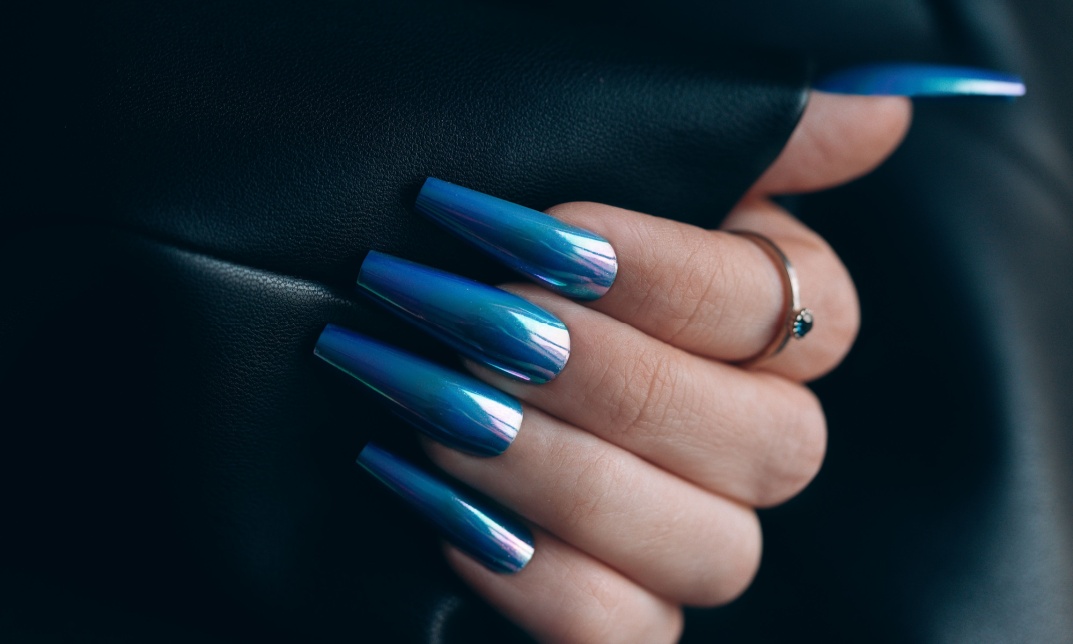
Acrylics are often chosen for strength. They are created by combining a liquid monomer and powder polymer to form a hard protective layer over the natural nail or extension tip. Because they are tough and can be reshaped or infilled, they remain one of the longest-lasting artificial nail options.
In most cases, acrylic nails stay looking good for around two to three weeks. After that, the regrowth becomes obvious, and maintenance is usually needed. Some people stretch this to four weeks, but that is rarely the best choice. The longer the gap at the cuticle, the more the structure of the nail becomes unbalanced.
Acrylics can be a good fit for clients who want length, durability and a more dramatic finish. The trade-off is that they require proper upkeep and careful removal. If they are picked off or soaked off incorrectly, the natural nail can become thin and damaged.
How long do gel artificial nails last?
Gel extensions and builder gel overlays are popular because they give a glossy, more flexible finish than acrylics. For many clients, this makes them feel lighter and more natural to wear.
Gel artificial nails usually last around two to three weeks. In some cases, a well-applied gel overlay on a healthy natural nail can remain intact for longer, but regrowth still makes maintenance necessary. Hard gel tends to be more durable than soft gel, though both depend heavily on correct prep and curing.
The main advantage of gel is appearance. It often provides a smooth, high-shine result with less bulk. The limitation is that some gel systems are less resistant to heavy impact than acrylics. For clients with hands-on jobs, that difference can matter.
Press-on nails and glue-on sets
Press-ons are the quickest option and the easiest to change. They are popular for special occasions, short-term wear and people who want flexibility without committing to salon extensions.
A basic press-on set may last only a few days, especially if adhesive tabs are used. With nail glue and careful prep, some sets can last up to a week or more. That said, they are still generally the least durable form of artificial nail.
Their strength is convenience. They are affordable, fast and accessible for beginners. Their weakness is consistency. If nails are not sized correctly or the natural nail is not cleaned properly beforehand, they can pop off quickly.
Dip powder nails
Dip powder systems are sometimes grouped with acrylic-style enhancements, though the process is different. The nail is coated with resin and dipped into coloured powder in layers, then sealed and finished.
Dip powder nails often last two to three weeks. They can offer a durable finish and are valued by some clients for their firm feel and long wear. As with any system, hygiene and application standards matter. Cross-contamination risks can increase if dipping methods are not handled properly in a professional setting.
For learners interested in nail services, this is where proper training becomes especially important. Product choice is only one part of the job. Technique, safety and client care are what build trust and repeat business.
Signs artificial nails need replacing or removing
A set does not have to fall off completely to be past its best. In practice, there are a few clear signs that artificial nails need an infill, repair or full removal.
Lifting around the edges is the most obvious warning sign. Once air or moisture gets underneath, the risk of trapping bacteria increases. Cracks, chips and breakages also matter, not just for appearance but because they can place strain on the natural nail. If the set has grown out significantly, the apex may no longer support the nail properly.
Pain is never normal. If artificial nails feel sore, tight or tender, they may have been applied incorrectly or damaged through impact. In that situation, removal should not be delayed.
How to make artificial nails last longer
Longer wear starts before the nails are even applied. Proper preparation, including cuticle work, cleansing and dehydrating the nail plate, gives the product a better foundation. Skipping that stage often leads to early lifting.
Aftercare is just as important. Wearing gloves for cleaning up, avoiding excessive soaking, and using cuticle oil regularly can all help. Clients should also avoid prising open tins, scraping labels or using nails as tools. Even strong enhancements are not designed for that kind of pressure.
Maintenance appointments make a difference too. Waiting until nails are badly grown out or damaged usually leads to more time, more cost and more risk to the natural nail. A simple infill at the right time is often the better option.
Are artificial nails bad for your natural nails?
Artificial nails are not automatically harmful, but poor application and poor removal can cause problems. The damage people often blame on the product is frequently the result of over-filing, picking, peeling or forceful removal.
When applied correctly and maintained well, many clients wear artificial nails regularly without serious issues. The key is allowing for nail health, choosing an appropriate system, and removing enhancements safely when needed. If the natural nail is already thin, inflamed or splitting, treatment should come before another full set.
This is also why professional knowledge has value. Beauty services may appear simple from the outside, but good results depend on hygiene, anatomy, technique and client education. For anyone building practical career skills through flexible online learning, understanding those foundations creates better outcomes than copying trends alone.
Choosing the right type of artificial nails
The best option depends on the client’s goals. If they want something for a party or short event, press-ons may be enough. If they need long-lasting structure and strength, acrylics are often the stronger choice. If they prefer a more natural feel with a glossy finish, gel may suit them better.
There is no single answer that works for everyone. Nail type, budget, lifestyle and maintenance routine all shape the result. That is why asking how long do artificial nails last is useful, but asking which type fits your routine is usually even more helpful.
For most wearers, the realistic expectation is this: temporary options last days, salon-quality enhancements usually last two to three weeks, and every method lasts longer when application and aftercare are handled properly. The smartest choice is not the one that promises the longest wear on paper, but the one that matches real life and can be maintained safely.