
No products in the cart.
Planning a trip can feel stressful when there are too many options to compare. This is where travel agencies help. They use their industry knowledge and supplier connections to arrange trips that match different budgets and needs. Many travellers are surprised to learn that agents often earn income without increasing the overall cost of a holiday. So, how does a travel agency make money? The answer includes supplier commissions, service fees, and carefully managed travel products that allow agencies to operate while providing valuable support to their clients.
What are the Main Commission-Based Income Streams?
Commissions are the bread and butter of most travel agencies. Here is how it works, simply. When a travel agent books a hotel or flight for you, the supplier pays the agent a percentage of the total sale. This percentage is called a commission. You do not pay this directly at all. The supplier pays it automatically behind the scenes.
Here are the main commission sources:
- Airlines usually pay around 1% to 5% commission per ticket sold
- Hotels typically offer 10% to 15% commission per booking made
- Tour operators pay around 10% to 15% on full package deals
- Cruise companies sometimes offer up to 15% to 16% commission
- Car hire companies usually pay around 5% to 10% commission
Moreover, some agencies earn what is called override commissions. This means they get bonus payments when they sell beyond a set target. So the more they sell, the more they earn overall. It is quite a motivating system for travel agents honestly.
How Does a Travel Agency Make Money Through Service Fees?
Commissions alone do not always cover all business costs. Therefore, many UK travel agencies also charge service fees directly to their customers. These fees are completely separate from the holiday price itself. They cover the travel agent’s time, knowledge, and effort in planning your trip properly.
Here is a simple breakdown of common service fees charged in the UK:
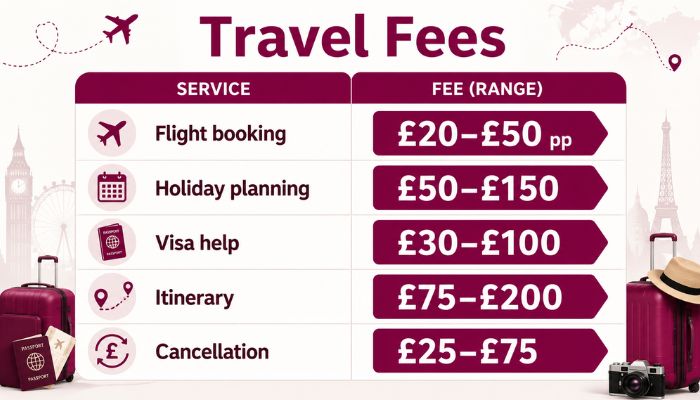
Furthermore, these fees make complete sense when you think about it. Planning a trip takes real skill and genuine effort. A good travel agent researches options, compares prices, checks visa rules, and handles any problems. That expert help is genuinely worth paying for. Many UK customers happily pay these fees because they value the convenience and peace of mind greatly.
What Role Do Airline Tickets Play in Agency Revenue?
Airline tickets used to be a massive income source for travel agencies. Back in the 1990s, airlines paid very generous commissions to agents. However, around 2002, most major airlines cut those commissions significantly. This was a huge blow to many agencies across the UK. Nevertheless, airlines are still an important part of the overall business picture.
Today, travel agents earn from airlines through booking fees charged directly to the customer. They also earn through corporate travel deals where big companies pay agents to manage all staff travel needs. Additionally, agents buy tickets in bulk at discounted prices through consolidators and sell them at a small profit. Global Distribution Systems like Amadeus also pay agents small bonuses for every booking they make through the system.
Corporate travel is particularly profitable for agencies. Big UK companies often hire travel management companies to handle all their business travel arrangements. These contracts can be worth thousands of pounds every single month. So airline-related income still matters a great deal in the overall revenue picture for agencies.
How Do Package Holidays Help Agencies Earn More Profit?
Package holidays are absolute goldmines for travel agencies. A package holiday bundles flights, hotels, and transfers together into one neat price. Tour operators like TUI and Jet2 create these packages. Travel agents then sell them and earn a healthy commission in return.
Here is why package holidays are so profitable for agencies:
- Tour operators pay around 10% to 15% on packages, which is much better than selling a single flight
- Customers love the simplicity of one total price covering absolutely everything
- Agents can add travel insurance, excursions, and airport parking to increase the total sale value
- The tour operator handles most of the trip logistics so the agent saves valuable planning time
Furthermore, UK customers absolutely love package holidays. Millions of British people book package deals every single year without fail. This creates a steady and very reliable income stream for agencies throughout the year. It is genuinely one of the most important parts of how travel agencies make their money in the UK today.
What is a Preferred Supplier and Why Does It Matter?
A preferred supplier is a hotel, airline, or tour operator that has a special agreement with the travel agency. This relationship means the agency gets better commission rates and access to exclusive deals. In return, the agency actively promotes and sells that supplier’s products to its customers regularly.
Preferred supplier relationships matter because they bring higher commissions, often 2% to 5% more than standard rates. Agents also receive exclusive offers and special deals to pass on to their customers. Suppliers provide brochures, training sessions, and helpful promotional materials too. When agents hit their sales targets, they earn bonus payments called override bonuses. Preferred suppliers also give agents faster and more helpful customer support when problems arise.
Consequently, smart travel agencies carefully choose their preferred suppliers. They pick reliable companies with quality products that their customers will genuinely enjoy. This actually benefits the customer too. When your travel agent recommends a particular hotel, it is usually because they truly trust that supplier. However, being transparent about these relationships is something good UK agents always prioritise.
How Do Travel Agents Earn From Hotel Bookings?
Hotels are one of the most generous commission payers in the entire travel industry. Hotels need bookings to survive and grow. Therefore, they happily pay travel agents good commissions to send guests their way. The standard hotel commission sits around 10% to 15% of the total room rate. Luxury hotels sometimes pay even more generously than that.
Let us look at a very simple example to understand this clearly. A customer books a five-night stay at a London hotel costing £1,000 in total. The hotel pays the travel agent 12% commission on that booking. That means the agent earns £120 from that single hotel booking alone. Multiply that by dozens of bookings each month and the income adds up very nicely indeed.
Additionally, travel agents earn from hotels through familiarisation trips where hotels invite agents to stay for free and experience the property personally. Some hotel chains also reward agents with loyalty points or cash bonuses. Group bookings of ten or more rooms often come with negotiated extra commission rates. Large agencies sometimes sign direct contracts with hotel chains to secure permanently better rates throughout the year.
What Are The Additional Revenue Streams Travel Agencies Use?
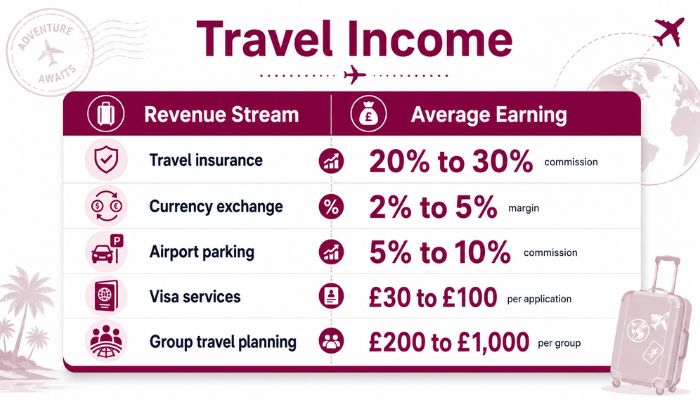
Smart travel agencies never rely on just one income source alone. They build multiple revenue streams to stay financially strong throughout the year. This makes complete business sense for any company. If one income source slows down during a quiet period, others keep the business running smoothly.
Here are the additional revenue streams many UK travel agencies use regularly:
- Travel insurance sales earn agents around 20% to 30% commission on every policy sold
- Airport extras like parking, lounge access, and fast track security each add a small steady commission
- Currency exchange services earn the agency a small margin on every foreign currency transaction
- Visa assistance services charge customers a clear service fee per application handled
- Group travel planning for schools and corporate clients earns both fees and commissions together
- Some modern agencies run travel blogs and earn advertising and affiliate income online
How Does A Travel Agency Survive Against Online Booking Sites?
This is the big question that everyone wonders about, honestly. Websites like Booking.com and Expedia offer instant online bookings anytime. So why would anyone still use a travel agent? The honest answer is because travel agents offer something that technology simply cannot fully replace.
Personal expertise is the biggest advantage travel agents have. A great travel agent knows destinations personally and gives honest firsthand advice. No computer algorithm can truly replicate that kind of genuine human knowledge and experience. When flights get cancelled or hotels run out of rooms, a travel agent immediately fights on your behalf. Online booking sites often leave you waiting on hold for many frustrating hours.
Planning a multi-country trip with multiple connections is genuinely complicated for most people. Travel agents handle this kind of complexity very effortlessly every single day. UK travel agencies that sell package holidays must also hold ATOL protection by law. This means your money stays completely safe even if the company suddenly collapses. That security matters enormously to British travellers and their families.
What Should You Know Before Using a UK Travel Agency?
Using a travel agency in the UK can make travel planning much easier. However, it is important to check a few things before you book. This helps you get good service and avoid problems later. First, check if the agency has ATOL or ABTA protection. These memberships help protect your money if something goes wrong. Also, ask about any service fees before you agree to book.
Next, make sure you know exactly what is included in your package. Check details such as flights, hotel stays, transfers, meals, and baggage allowances. In addition, compare the agency’s quote with online prices. Sometimes travel agents can offer better deals. Moreover, ask if the agent has personal experience with your chosen destination. Their advice can be more helpful and accurate.
Finally, read reviews on Google and Trustpilot. Real customer feedback can help you choose a reliable agency. By taking these simple steps, you can book with confidence and enjoy a smoother travel experience.
Conclusion on How Does a Travel Agency Make Money
Travel agencies make money in different ways. They earn commissions from hotels, airlines, tour operators, and cruise companies. Many agencies also charge service fees for planning trips and handling bookings. Some earn extra income from travel insurance, airport services, and visa support.
Even today, travel agents remain useful. They help people save time, avoid stress, and find suitable travel deals. They also provide support when travel plans change unexpectedly. By understanding how travel agencies earn money, you can better appreciate the value and expertise they bring to every trip.
Frequently Asked Questions (FAQs)
1. How much do travel agents make per booking in the UK?
- Travel agents usually earn about £20 to £150 per booking. It depends on the trip price. Expensive holidays give higher commissions.
2. How do travel agents actually make money?
- Travel agents make money from commission. They get paid by airlines, hotels, and tour companies. Sometimes they also charge small service fees.
3. What is the main source of income in a travel agency?
- The main income is commission. It comes from holiday companies. Most money comes from package holidays and tours.
4. How do travel agents make money if they don’t charge a fee?
- They still earn commission from suppliers. The customer does not pay extra. The travel company shares part of the profit.
5. How much do TUI travel agents earn?
- A TUI travel agent usually earns £18,000 to £25,000 at the start. Experienced agents can earn £25,000 to £30,000 or more. They can also earn extra commission.
6. What are the disadvantages of using a travel agent?
- Travel agents can sometimes cost more. You may have less control over your booking. Simple trips may not need an agent.