No products in the cart.
Thinking about becoming a lifeguard? Good call. It’s one of the better first jobs out there, and the pay is fairer than most people guess. Here’s the quick answer. How much does lifeguards make in the UK? About £12 to £14 an hour, or £19,000 to £27,000 a year full-time. The National Careers Service puts starters near £19,000 and experienced guards up to £27,000.
Hourly work is the norm here. Most guards clock variable shifts, often evenings and weekends. So your weekly pay depends on how many hours you work.
Full-time guards earn the steady end of that range. Part-timers earn less overall, but the hourly rate stays the same. Beach guards can earn a bit more in summer, and extra skills push your pay up further. The rest of this guide digs into each piece.
What is the average pay for a lifeguard per hour?
Across the UK, the average pay for lifeguard sits at about £12.80 an hour. That figure comes from Indeed, based on thousands of reported salaries. The National Careers Service puts the usual band at £10 to £14 an hour.
So where do you fall? New starters often begin near the bottom. Experienced guards reach the top.
London pays a touch above average, about £12.94 an hour by Indeed’s numbers, though living costs eat into that. Smaller towns can pay a little less. Still, for a job you can do part-time around studies, it holds up well against other entry roles.
How much do lifeguards get paid each year?
Want the yearly picture? Here’s how much do lifeguards get paid over a full year. A full-time pool guard earns roughly £20,000 to £25,000, the National Careers Service reports, with experienced staff nudging £27,000. Glassdoor data for London lands near £19,500 a year for the average guard.
That yearly figure rests on your hours. Lifeguarding is paid by the hour. So a 37 hour week builds a fuller wage than a casual contract. Senior guards who run shifts can pass £25,000.
What lifts your yearly pay:
- More hours on your contract
- A senior or team-leader role
- Working in a higher-cost city
- Extra duties like swim teaching
Does lifeguard salary UK shift by location?
Yes, your lifeguard salary UK depends a lot on where you work. Big cities and busy coastal spots tend to pay more. Quiet inland towns pay less. The gap isn’t huge, but over a year, it adds up.
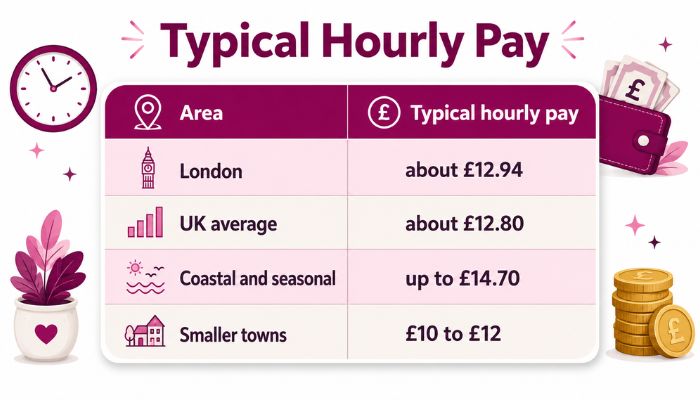
London’s higher rate looks good on paper. But rent and travel there cost more too. Seasonal beach spots spike in summer, when demand jumps. So if money is your main aim, a busy resort in peak months can beat a quiet pool.
What do beach lifeguards earn versus pool lifeguards?
Beach and pool work pay differently. Beach guards, mostly with the RNLI, earn about £12.30 to £14.70 an hour, the RNLI reports. Pool guards usually sit nearer the £12 to £13 mark all year round. So beach work pays more per hour, but mainly in summer.
Beach shifts carry more risk, which is part of why they pay a bit more. The season is short, though. Roughly May to September.
Pool work is the steadier bet. Shifts run all year, so the money keeps coming in winter too. One job gives you a summer spike then a break. The other pays a reliable wage across all 12 months.
How much does lifeguards make when starting out?
Starting out, how much does lifeguards make? Most beginners earn close to minimum wage for their age, then climb fairly quickly. A new adult guard often starts around £10 to £12 an hour. Within a year or two, many reach £13 or more as they prove themselves.
Your first step is the qualification, usually the National Pool Lifeguard Qualification. Get that and employers will trust you with real shifts.
After that, pay tends to creep up each season you stay on. Some pools will even cover your training cost upfront. So the early days won’t make you rich. But the ladder is short here, and you won’t wait years for a bump.
What do 16 and 17 year old lifeguards get paid?
Younger guards earn the youth minimum wage. For 16 and 17 year olds, that’s currently £8.00 an hour, the rate gov.uk sets. Some employers pay above it, but that’s the legal floor.
At eighteen, the rate jumps. Workers aged 18 to 20 get £10.85 an hour right now and over-21s reach the National Living Wage of £12.71. So pay rises sharply as you age up.
Many young guards start at sixteen, build experience, then earn the adult rate within a couple of years.
Youth pay at a glance:
- 16 to 17: currently £8.00 an hour
- 18 to 20: currently £10.85 an hour
- 21 and over: currently £12.71 an hour
How do lifeguard jobs pay grow with experience?
Experience is where lifeguard job pay starts to climb. A first-year guard sits near the bottom of the range. After a few seasons, you move up. Senior and team-leader roles can pass £25,000 a year, the National Careers Service suggests.
So how do you climb? Run a few shifts as the senior on duty and help train the new intake and your rate creeps up with it.
Pools like keeping staff they trust. Nobody can make a big jump overnight. But guard well for a couple of seasons and the money follows.
Which extra skills push a lifeguard’s pay up?
Learning extra skills helps you climb the career ladder faster. Actually, teaching swimming classes gives you a second wage. Also, holding a first aid certificate makes you highly valuable. Bosses really need people who understand the pool water systems. To be honest, stepping up to a supervisor role pays well. Your hourly rate climbs higher when you lead the team. Plus, you gain immense respect from all your new coworkers.
Swim teaching is the most popular one. Lessons often pay more per hour than guarding itself.
Pool plant work, looking after water testing and safety kit, also bumps your value. So the trick is simple: do more than watch the water. Every certificate you add gives you a reason to ask for better pay. And most pools will say yes.
What perks come with a lifeguard job?
Pay is not the whole story. Lifeguarding offers extra benefits that other beginner jobs miss. Actually, free gym or pool access is very common. Also, flexible shifts fit perfectly around your college classes. Plus, you learn lifesaving skills that stay with you forever.
Bank holidays usually pay extra money. So working a busy Easter shift lifts your daily wage. You stay physically fit without needing a gym subscription. To be honest, this work looks amazing on your CV. The basic hourly rate is already quite fair. These extra bonuses make it sweeter than numbers alone.
How does part-time and seasonal pay work?
Part-time and seasonal guards earn the same hourly rate, just fewer hours overall. So your yearly total drops but your pay per shift holds firm. This setup suits students and anyone wanting summer only work.
Seasonal beach roles run from May to September. Pack in the hours during peak weeks and a single season can bring £9,000 to £10,000, by RNLI figures.
Pool work, on the other hand, gives year-round shifts. So you choose your rhythm. A summer sprint, or a steady twelve months.
Quick pay comparison:
- Full-time: steady wage, most hours
- Part-time: same rate, fewer hours
- Seasonal: summer spike, then a break
How can you start a lifeguard career in the UK?
The route is short and clear. Pass your National Pool Lifeguard Qualification, the standard ticket for pool work. Plenty of leisure centres and the RNLI run funded training, so the cost needn’t hold you back.
Strong swimming comes first, since you’ll need to dive into deep water on the test. After that, it’s first aid, CPR, and rescue skills. Then you’re ready for shifts.
Apply to local pools, councils, or the RNLI for beach work. So with a few weeks of training, you could be earning the going rate by summer.
So, is lifeguarding worth it for the pay?
How much does lifeguards make in the UK in real terms? Roughly £12 to £14 an hour, or £19,000 to £27,000 a year, depending on hours, location, and skill. For a flexible job you can start young, that’s solid.
My honest take? As a first job or a summer earner, lifeguarding punches above its weight. Steady hours, real skills and a clear path up.
Get your qualification, add a swim teaching badge and you’ll be near the top of the range faster than you’d think.
Frequently Asked Questions (FAQs)
1. What do lifeguards earn in the UK?
- Most UK lifeguards earn about £12 to £13 an hour, or £19,000 to £27,000 a year with experienced guards and supervisors reaching the higher end.
2. What jobs pay 500 pounds an hour?
- Very few roles reach £500 an hour, but top barristers, specialist surgeons, elite consultants, and some company directors can, usually after years of training and a strong reputation.
3. What jobs earn 300k a year in the UK?
- Senior surgeons, investment bankers, company directors, and successful business owners are among the roles that can bring in around £300,000 a year in the UK.
4. How much do 16 year old lifeguards get paid in the UK?
- A 16-year-old lifeguard usually earns the youth minimum wage, currently £8.00 an hour as set by gov.uk, though some employers pay a little more.
5. What jobs pay 40 an hour in the UK?
- Electricians, plumbers, IT consultants, pilots, and experienced healthcare staff are among the jobs that can pay around £40 an hour in the UK.
6. Who is the highest paid lifeguard?
- There’s no single named record-holder, but a Los Angeles audit reported by Reason found some city guards earning over $200,000 a year once benefits were added, far above typical UK pay.