
No products in the cart.
You may be thinking about how to become a dental assistant in the UK. Especially if you are looking for a stable, welcoming career with zero prior experience. In most cases, your professional journey will begin by securing an on-the-job trainee position. At a local town clinic or finding an apprenticeship.
Starting out means navigating official training courses while stepping directly into active clinical work. By balancing your studies with real-world practice, you can earn a reliable pay cheque while learning the essential professional rules. Ultimately, entering the dentistry sector provides incredible job security for your family, regular working hours, and multiple pathways for long-term career progression.
Let’s dive into this guide to explore daily clinical tasks, salary expectations, and GDC-approved qualifications.
Defining the Dental Nurse Role
A dental nurse serves as an indispensable cornerstone of any successful clinical practice. Specifically, your presence ensures that every patient feels safe, comfortable and completely relaxed from the moment they sit in the chair.
Beyond patient comfort, you are also the person responsible for keeping the surgery immaculately organised and prepared for daily treatments. Because the dentist relies heavily on your efficiency, operations cannot run smoothly or quickly without your support.
In the end, this rewarding profession requires a blend of high energy and a genuinely kind heart, offering you the chance to become a vital, valued member of a friendly local healthcare team.
How to Become a Dental Assistant with Zero Experience
Here’s a simple path to becoming a dental assistant:
Step 1: Focus on the Essentials (Basic Requirements)
Before applying ensure you meet the core foundational competencies required for daily clinic tasks.
- Brush up on English and Math: You will need basic proficiency in these subjects to handle patient charts, manage appointment bookings, and accurately mix dental materials.
Step 2: Highlight Your Soft Skills
Since you don’t need prior technical knowledge to start, your personal attributes are your strongest selling points.
- Showcase People Skills: Emphasise your ability to communicate politely and effectively with the public, as you will be interacting with patients daily.
- Demonstrate Reliability: Prove that you are punctual and organised. Dental clinics run on strict schedules, so building trust early is key.
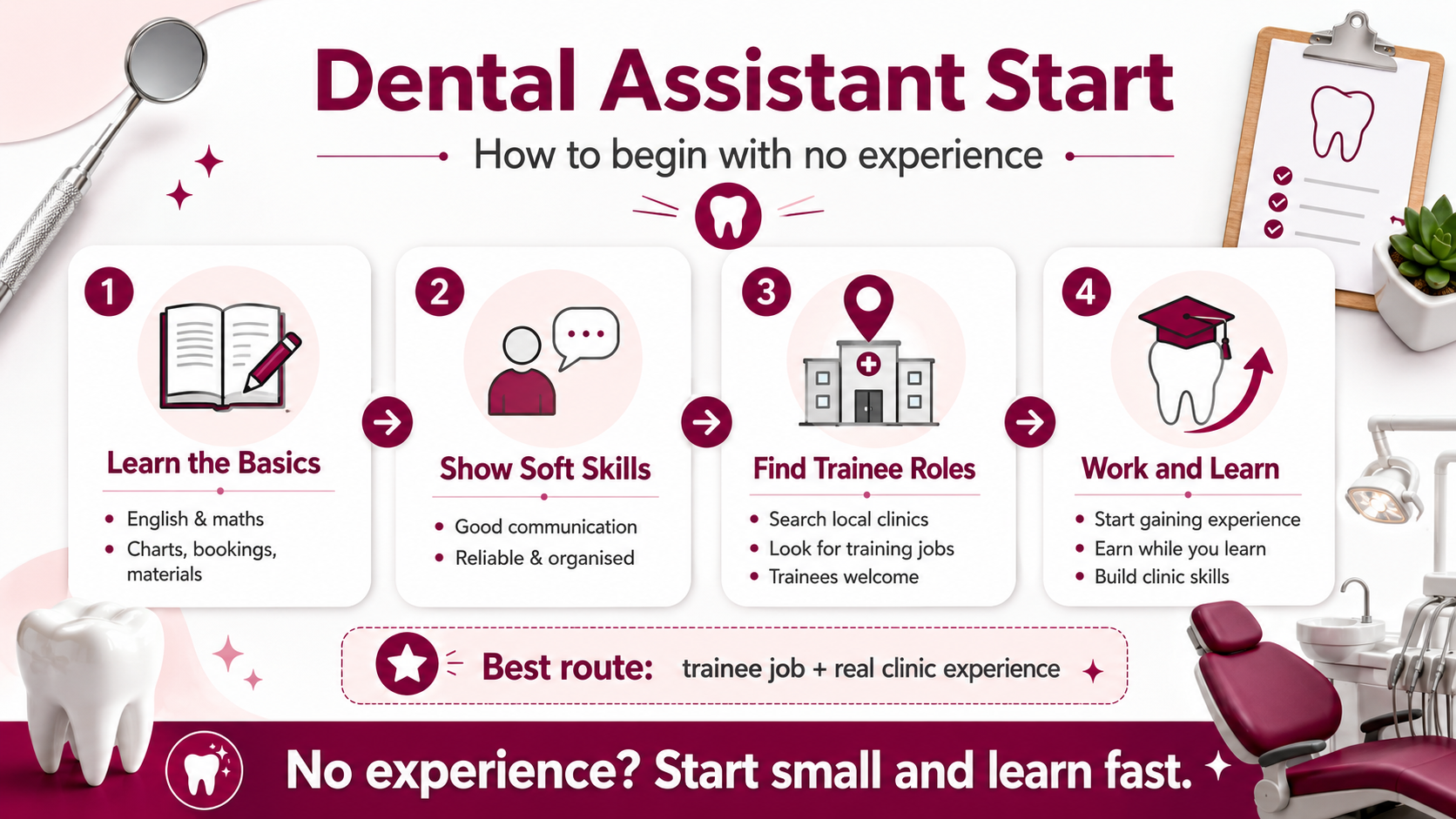
Step 3: Target Trainee Job Openings
Begin your active job hunt by looking for clinics willing to teach you from the ground up.
- Search for local advertisements: Look specifically for roles explicitly offering on-the-job training.
- Leverage the “blank slate” advantage: Keep in mind that many practices actually prefer hiring trainees so they can mould you into their specific clinical workflows.
Step 4: Start Working and Learning Simultaneously
Once you secure a role, your practical education begins.
- Gain experience from day one: Step into the clinic ready to learn fresh talent workflows.
- Earn while you learn: Use this fastest route to start securing a salary immediately while simultaneously mastering the professional rules of the dental field.
What is a Dental Support Worker?
When browsing job boards, you will often come across the title of “Dental Support Worker.” This specific role serves as an ideal entry point for anyone looking to launch a career in healthcare without prior experience.
In this position, you will provide essential, day-to-day assistance to qualified dental nurses and dentists, helping with vital tasks such as sterilizing clinical tools and managing patient files.
By taking on these foundational responsibilities, you will gain a first-hand understanding of how a busy dental practice operates from the inside.
Therefore, this practical exposure is excellent for building the confidence and familiarity needed to transition into official dental nurse training later on. For many newcomers to the UK securing a support worker role proves to be a highly effective and welcoming first step into the domestic healthcare sector.
Essential Skills for Success
You do not need to be a scientist to be a great dental assistant. Instead, you need a specific set of personal qualities that ensure the clinic runs smoothly and patients feel cared for.
Good Listening
- Following the dentist’s instructions carefully and accurately is vital. Hearing a directive correctly the first time ensures patient safety keeps procedures moving efficiently, and allows you to anticipate the dentist’s next step during treatment.
Calm Nature
- Helping patients who feel scared, nervous, or anxious about dental procedures is a daily responsibility. A reassuring presence, gentle tone, and steady demeanour act as an anchor helping to soothe fears and create a comforting environment.
Cleanliness
- Keeping things tidy, organised, and sterile must be something you enjoy. Maintaining an immaculate workspace is critical for strict infection control, preventing cross-contamination, and ensuring that all necessary tools are instantly accessible.
Communication
- Explaining health tips and post-procedure care in simple English is a core part of the role. Translating complex dental jargon into clear straightforward instructions ensures patients know exactly how to care for their teeth at home.
Speed
- Moving and working quickly when the clinic is busy keeps the day on track. Being agile and adaptable allows you to rapidly prep rooms between appointments and manage unexpected emergencies without sacrificing the quality of care.
Why Immigrants Choose Dentistry
The dental sector is a very welcoming place for people from all over the world. The UK dental sector is incredibly welcoming to people from all over the world, offering a diverse and inclusive environment to launch a new career.
Moreover, the industry provides a “recession-proof” career path, which means jobs remain consistently available regardless of economic shifts. Because people will always require dental care even during tough economic times, entering this field provides an exceptionally high level of job security for you and your family.
In addition to financial stability, the working hours in this sector are usually very regular, typically running from 9 am to 5 pm.
Therefore, this predictable schedule allows you to maintain an excellent balance between your professional responsibilities and your home life. Ultimately, pursuing a career in dentistry stands as a highly stable, respected, and rewarding path within the United Kingdom.
Understanding the Training Process
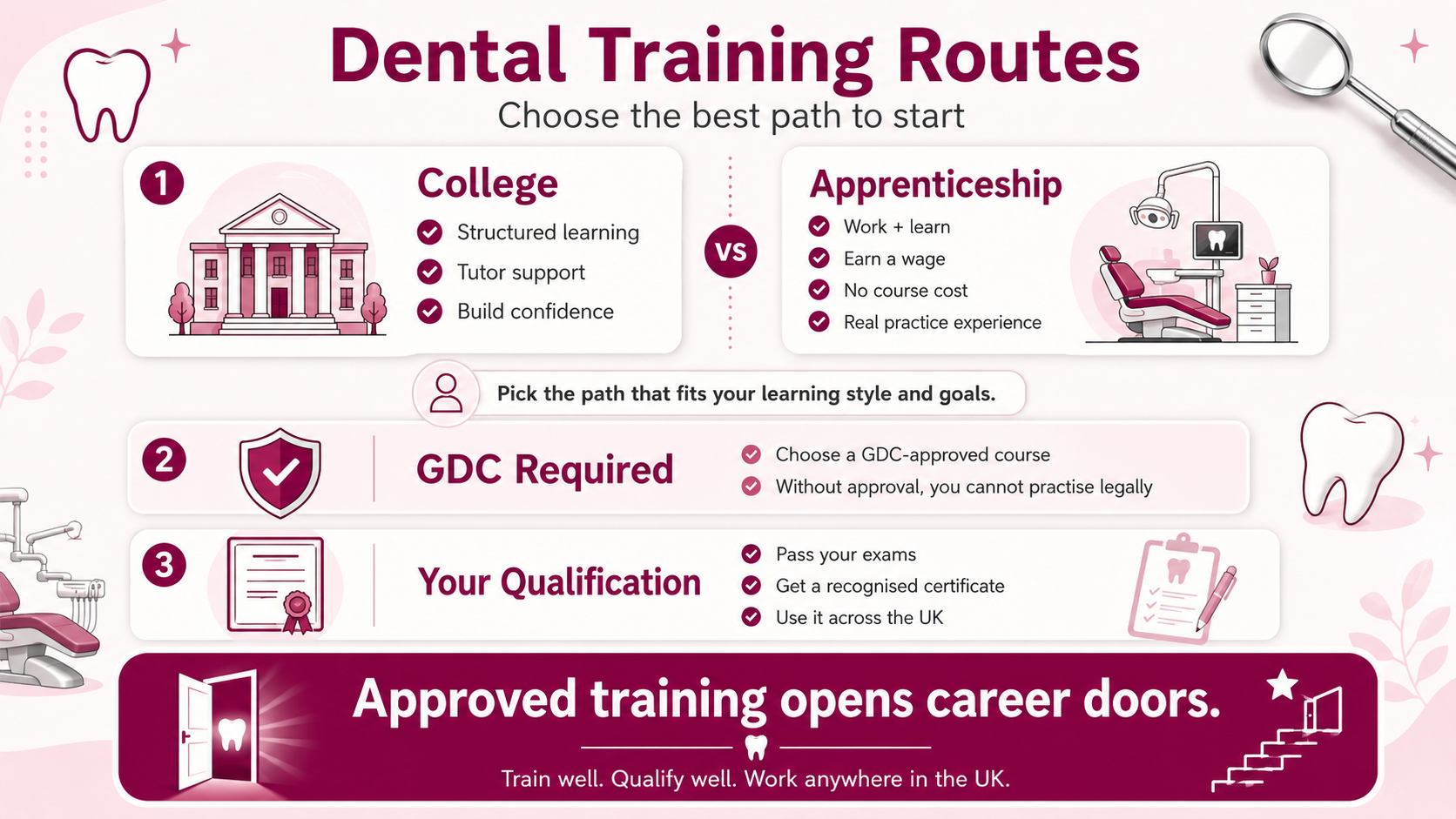
There are two primary educational pathways to choose from when starting your career, depending on your preferred learning style and financial goals.
The College Pathway
Studying for a Diploma in Dental Nursing at a local college offers a highly structured classroom environment. This route is ideal if you prefer a traditional learning setup with dedicated tutor support to build your confidence before entering a busy clinical environment.
The Apprenticeship Pathway
Alternatively, an apprenticeship is a highly strategic option that allows you to work and learn simultaneously.
In this role, your employer covers the entire cost of your schooling, meaning you graduate completely free of student debt. Furthermore, you gain invaluable, real-world experience in a working practice while earning a steady wage.
Meeting the GDC Requirement
Regardless of the pathway you select, your chosen course must be officially approved by the General Dental Council (GDC). The GDC is the essential regulatory body that ensures all dental professionals across the UK meet the highest standards of safety and care.
Therefore, training through a non-approved course will prevent you from practising legally, making GDC validation a top priority.
Your Professional Passport
Once you successfully pass your exams, you will receive an officially recognised certificate. This qualification effectively acts as your professional passport to the healthcare sector.
Because it is recognised everywhere, it gives you the ultimate flexibility to work anywhere in the country and continuously opens doors to long-term career progression.
Final Thoughts
When figuring out how to become a dental assistant. Planning your training path carefully is the best choice for your peace of mind. Starting out simply means your mind and body are adapting to a busy new environment. From managing strict infection control to supporting nervous patients chair-side.
Because balancing your coursework with high-paced clinical surgery rooms can put extra pressure on your weekly schedule, do not rush. Take your time to review GDC-approved courses and look for local trainee advertisements that offer on-the-job training. Focus on highlighting your people skills, reliability, and basic English and math skills to future employers.
FAQs
What are the cons of being a dental assistant?
- Physical strain, infectious risks and managing stressful patient interactions daily.
What’s higher than a dental assistant?
- Dental hygienists, therapists and dentists have more advanced clinical training.
How to earn more money as a dental assistant?
- Obtain certifications in radiography, sedation, or advance into office management.
What’s the hardest part of being a dental assistant?
- Comforting anxious patients while standing for long, busy clinical shifts.
How fast can you become a dental assistant?
- You can start working immediately as a trainee while studying.