No products in the cart.
Do your radiators have stubborn cold spots at the top? Perhaps they make strange gurgling noises when the system kicks in. If so you are likely dealing with trapped air. Air pockets inside your central heating system prevent hot water from circulating fully. Consequently your boiler works twice as hard to heat your home, which drives up your gas bills. Fortunately, learning how to bleed a radiator effectively is a quick, budget-friendly DIY fix. This simple guide restores warmth and slashes unnecessary energy waste today.
What Are the Signs of Trapped Air in Your Heating System?
You can spot trapped air very easily if you know what to look for. Firstly, feel the surface of your radiator carefully. Does the bottom feel hot while the top feels completely ice-cold? This is a classic sign of air blockage. Secondly, listen to your heating system when it turns on. Do you hear loud banging, clicking, or gurgling noises echoing through your pipes? Air pockets cause these strange sounds. Therefore, you must release this air to let the hot water flow properly again. Do not ignore these warnings.
How Does Trapped Air Impact Your UK Energy Bills?
Trapped air directly harms your wallet by reducing your heating efficiency. When air bubbles fill your radiator, the unit cannot emit its full heat. Consequently, your rooms stay chilly, and you feel uncomfortable. To fix this, you will likely turn your thermostat up. This action forces your boiler to run longer and burn much more fuel. You waste money on gas or electricity every single hour. However, bleeding the air restores maximum heat output immediately. As a result, you burn less energy and lower your monthly bills.
What Are the Main Radiator Problems and Solutions?
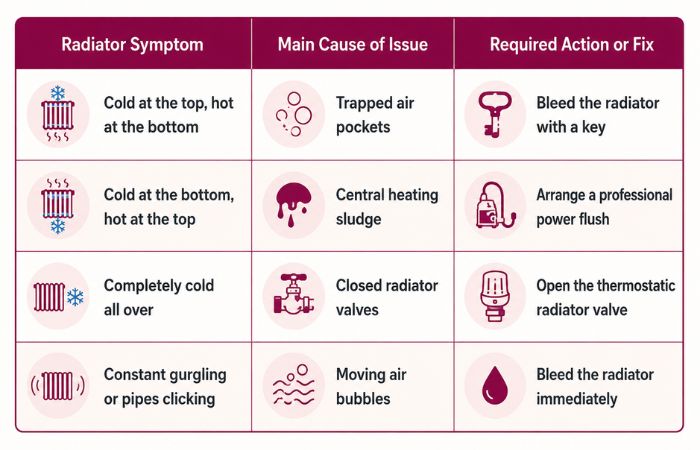
Before you grab your tools, you can use the quick reference table below to diagnose your specific issue. This table helps you identify exactly what is wrong with your central heating system and matches the symptom to the correct household fix.
How Often Should You Bleed Your Radiators?
At least once a year you should bleed your radiators. This should ideally be finished in the autumn before the bitterly cold winter arrives. This is the most regular routine maintenance.
After any significant plumbing repairs, you should also inspect your radiators. If engineers empty your system they often introduce new air pockets. Additionally you should be installed. Regular inspections maintain the health of your central heating system. As a result incorporate this easy chore into your yearly house care regimen.
What Tools Do I Need to Bleed a Radiator?
You only need a few basic tools to complete this job successfully. Firstly, you must find a standard UK radiator bleed key. These cheap brass keys feature a distinct square interior slot that fits the valve perfectly. Secondly, you need a clean cloth, an old rag, or a thick towel. This fabric catches any sudden water drops before they ruin your floor. Finally, grab a small container or a plastic bowl. This container catches larger spills. Keep these items nearby before you start the process.
Can You Bleed a Radiator Without a Key?
You can absolutely bleed a radiator even if you lose your key. Look closely at the center of your bleed valve plug. Most modern UK radiators feature a small slot cut directly into the metal pin. Therefore, a small flat-head screwdriver will work perfectly instead of a key. Simply slot the screwdriver into the groove and turn it carefully. However, older radiators might lack this convenient slot. In that case, you must buy a proper key from a local DIY shop before you can proceed.
What Else Do I Need to Prevent Water Damage?
You must protect your home decorations because radiator water stains carpets badly. This internal liquid is often filthy, greasy, and dark. Therefore, you should prepare your work area properly before opening any valves. Place your old towel directly on the floorboards or carpet beneath the radiator corner. Next, hold your small plastic bowl directly under the valve plug. This setup catches every single drop of dirty water. Consequently, you keep your home clean and completely avoid expensive carpet cleaning bills. Also, wear protective gloves.
Why Must You Turn Off the Central Heating First?
You must switch off your central heating completely before you touch any valves. This is a vital safety rule for every homeowner. If you leave the heating on, the pump can introduce more air into the pipes. Even worse, the system operates under high pressure when active. Opening a valve on a running system can spray boiling water directly at your face. Therefore, turn the system off and wait at least one hour. Let the radiators cool down fully so you avoid painful accidental scalding.
How Do You Locate the Radiator Bleed Valve?
Finding the bleed valve takes only a few seconds on any radiator. Walk over to your cold radiator and look at the top corners. You will see a small, round metal fixture attached to the side. Look closely at the very center of this metal component. You will spot a small square pin or a slotted screw head. This specific part is the bleed valve plug. It controls the air inside the unit. Every standard radiator has one, usually located on the top right or top left side.
How Do You Prepare the Area to Avoid Mess?
Preparation prevents messy cleanups later, so take your time with this step. Double-check the position of your protective towel on the floor. Make sure it covers the entire area beneath the valve. Hold your small container firmly in one hand. Position it directly underneath the valve opening to catch sudden drips. Keep your cloth ready in your other hand. This allows you to wipe away water instantly when it appears. You can safely open the valve without ruining your beautiful flooring.
How Do You Safely Open the Radiator Valve?
Insert your bleed key or flat-head screwdriver into the central valve slot. Hold the tool firmly so it does not slip and scratch the metal. Next turn the key slowly in an anti-clockwise direction. You usually only need a quarter or a half turn to open it. Immediately, you will hear a distinct hissing sound. This noise means the trapped air is escaping into the room safely. Do not unscrew the plug completely. If you remove it, water will pour out uncontrollably.
When Should You Close the Radiator Valve?
Listen carefully to the hissing sound as the air escapes from the unit. Eventually, the hissing noise will stop quite suddenly. At that exact moment, a stream of water will emerge from the valve. You must act quickly when this happens. Turn your key clockwise to tighten the valve plug again. Do not overtighten the screw because you might damage the delicate thread. Simply seal it firmly until the water stops dripping. Finally, use your dry cloth to wipe the radiator clean.
How Do You Check and Top Up Your Boiler Pressure?
Bleeding your radiators releases pressure from your sealed central heating system. Therefore, you must check your boiler gauge immediately after finishing the job. Walk over to your boiler and look at the small dial on the front panel. The needle should sit between 1.0 bar and 1.5 bar. If the needle drops below 1.0 bar, your system needs more water. Use your external filling loop valves to add water carefully. Stop filling the moment the pressure gauge reaches the correct green zone.
Should the Heating Be On or Off When Bleeding a Radiator?
Your central heating must be completely off when you bleed a radiator. Never attempt this job while the system is running or hot. If the pump is active, it moves water and air rapidly through the pipes. This movement makes it impossible to remove the air pockets effectively. Furthermore, hot water can cause severe burns if it sprays out. Therefore, turn off the boiler, wait for the metal to cool down entirely, and then begin the bleeding process safely.
Why is the Water Coming Out of My Radiator Black?
Black or dark brown water indicates a buildup of internal radiator sludge. This unpleasant substance consists of rust, dirt and tiny metal filings from your pipes. Over time, oxygen reacts with the iron components and creates this thick debris. Sludge settles at the bottom of your radiators and blocks heat completely. If your radiators remain cold at the bottom after bleeding, you have a sludge problem. You should call a Gas Safe registered engineer to perform a professional system power flush quickly.
Do I Need to Bleed Downstairs or Upstairs Radiators First?
If you want to clear your entire house always follow a specific order. Start with the radiator located furthest away from your boiler on the ground floor. Work your way through the remaining downstairs radiators systematically. Once finished downstairs, move upstairs to the top floor of your home. Always start with the lowest radiators because air naturally rises to the highest points of a building. This correct sequence ensures you clear all air efficiently without pushing bubbles back down into the pipes.
Conclusion
In just 10 minutes, learning how to bleed a radiator effectively can transform your home. It changes a chilly, noisy house into a warm, energy-efficient sanctuary. This simple piece of home maintenance keeps your boiler running smoothly. Additionally it stops you from throwing money away on inflated winter heating bills. Do not wait until the weather turns freezing to check your system. Take action right now. Head over to your boiler check the pressure gauge and feel your radiators. If they feel cold, grab your key and fix them today!
Frequently Asked Questions (FAQs)
1. Is it best to bleed radiators with the heating on or off?
- Bleed radiators with the heating turned off and the system cooled down to avoid hot water or air escaping.
2. What is the best way to bleed your radiator?
- Turn off the heating, use a radiator key to slowly open the bleed valve, release trapped air, then close it when water flows steadily.
3. Is bleeding one radiator enough?
- If only one radiator has trapped air, bleeding that one is usually enough. If several radiators are cold, bleed all affected radiators.
4. Do I bleed radiators upstairs first?
- In most two-storey homes, start with the upstairs radiators because air naturally rises.
5. When bleeding radiators, do you let all the water out?
- Only release the trapped air and close the valve as soon as a steady stream of water appears.
6. What is the 30 minute heating rule?
- After bleeding radiators, wait about 30 minutes before checking the system or re-bleeding to allow the heating to circulate properly.