

No products in the cart.
A lifeguard is a trained professional who protects people in swimming pools, beaches and water parks. They watch swimmers closely and act fast during emergencies. Their main task is to keep everyone safe while swimming. Pay for lifeguard roles in the United Kingdom remains attractive for many job seekers.
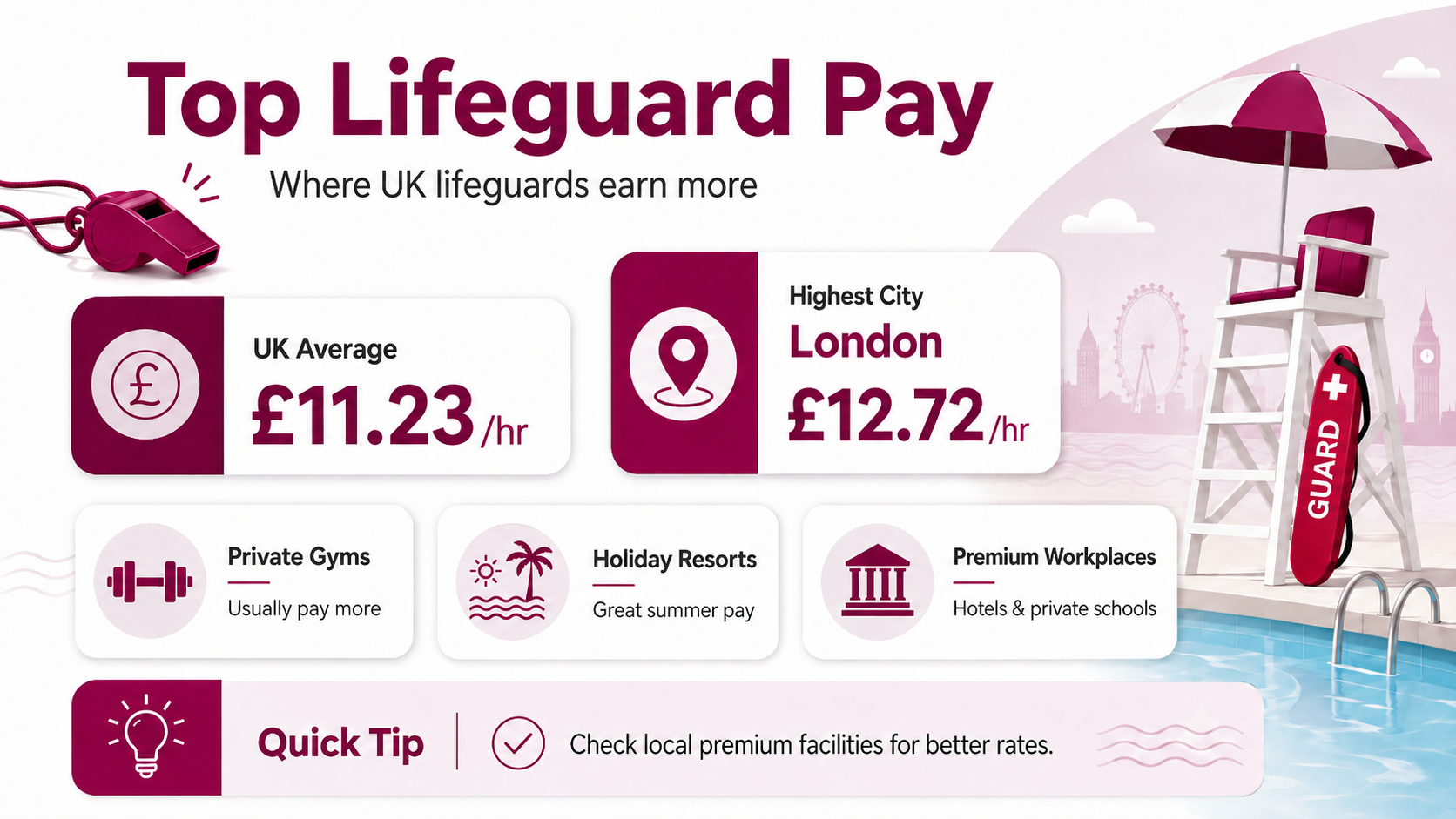
Generally, lifeguards earn around £11.23 per hour on average, making it a solid entry-level career choice. Pay varies based on location, experience and workplace type. Busy cities and private leisure centres often offer higher wages than smaller towns. Many employers also provide extra benefits and training opportunities. As a result, lifeguarding offers a steady income and clear opportunities for career growth.
How Much is the Starting Pay for Lifeguard Positions?
Most new workers want to know exactly what they will earn. In the UK, the average salary for lifeguard work is about £11.23 per hour. This is a solid starting point for a young professional. Your boss will give you a contract that explains your hourly rate. This rate often matches the national living wage for the area.
As a result, you can pay for your daily needs and save some money too. Many people start this job during their teenage years or early twenties. It provides a steady income while you learn the ropes of the leisure industry. Therefore, you can plan your future with a clear idea of your earnings.
Where Can You Find the Best Pay for Lifeguard Duties?
Different workplaces offer different salaries for lifeguard jobs. Private gyms and health clubs usually pay the most because they have bigger budgets. Holiday resorts also offer higher wages during the summer season.
Some private schools and luxury hotels hire lifeguards for extra duties, which increases pay. Researching local facilities can help you find better rates. Choosing premium workplaces can boost your monthly income and make the job more rewarding.
- The average hourly rate for UK lifeguards is £11.23.
- London offers the highest wages at £12.72 per hour.
- Private gyms usually pay more than public council pools.
- Holiday resorts offer great seasonal opportunities during the summer.
How Does Your City Affect Your Total Earnings?
Your location changes the number on your payslip significantly. London pools pay the most because living in the city costs a lot. You can earn around £12.72 per hour if you work in the capital. Meanwhile, Manchester pays about £11.45 per hour for the same role. Birmingham usually offers a rate of £11.10 per hour on average.
Employers in the south of England often pay more than those in the north. This helps staff manage high rent and travel costs. In addition, big cities usually have more pools and more job openings. Checking the rates in nearby towns is always a smart move before applying.
Why Do Private Clubs Offer Better Salary Packages?
Luxury gyms and private clubs work differently from public leisure centres. These places charge their members high fees to use the facilities. Consequently, they can afford to pay their staff a much better salary. You might find that these clubs offer a higher starting wage than the local council.
They also provide a very modern and clean place to work. You may have to do a few extra tasks, like testing the water or cleaning. However, the extra money makes these small chores worth your time. Many private clubs also offer free uniforms and branded gear to their team. This saves you money on work clothes every year. You should look for these high-end roles to maximise your earnings.
Which Certifications Help You Earn More Every Month?
Every lifeguard needs the National Pool Lifeguard Qualification to get hired. But extra certificates can increase your pay for lifeguard roles. Swim teaching is one of the best options, as it often pays more per hour.
You can also learn advanced first aid or AED skills. These make you more useful to any leisure team. More training shows professionalism and helps you stand out. It can also help you negotiate higher wages. Overall, gaining extra skills is a fast way to boost your income.
- London workers earn more to help with high living costs.
- Swimming teacher certificates can lead to a significant pay rise.
- Advanced first aid training makes you a more valuable employee.
- Private clubs often include extra perks like free meals or uniforms.
Can Working Overtime Increase Your Total Take-Home Pay?
Taking extra shifts is the easiest way to boost your bank balance. Many pools get very busy during school holidays and weekends. Your manager will often ask for volunteers to stay late or come in early. In addition, working on bank holidays like Christmas usually pays a higher rate. Most employers offer “time and a half” for these special days.
This means you earn 50% more than your usual hourly wage. You should always ask about overtime rules when you sign your contract. It is a great way to save up for a holiday or a new car. Being helpful and saying yes to extra hours will impress your boss. This can lead to faster promotions and even better pay.
What Kind of Extra Benefits Will You Receive?
Cash wages are only one part of the total job package. Most leisure centres give their staff some fantastic extra perks. For instance, you will likely get a free gym and pool membership. This saves you hundreds of pounds every year on your own fitness.
Some places also offer discounts on swimming lessons for your family members. You will also get a set number of paid holidays each year. This means you get a full wage even when you are on a break. Most companies also include a pension scheme to help you save for the future. These benefits make the total value of your job much higher.
How Many Hours Do You Need to Work Each Week?
A typical lifeguard job involves around 38 hours per week. You work on a rota with other team members, so shifts change often. Some start early in the morning, while others finish late at night.
This keeps the work varied and engaging throughout the week. Part-time options are also available for more flexibility. Many pools offer schedules that suit students or parents. This makes it easy to balance work with personal life and hobbies.
- Holiday shifts often pay “time and a half” or double.
- Free gym access saves you a lot of money each month.
- Full-time roles involve 37 to 39 hours of work per week.
- Flexible part-time shifts are perfect for students or busy people.
When is the Best Time to Apply for New Jobs?
Most pools start looking for new staff during the spring months. Outdoor pools and beach teams need to hire people for the busy summer season. You will find many job openings on websites like Indeed or LinkedIn in April. However, indoor leisure centres hire new guards throughout the year.
You should keep an eye on your local council’s career page for the latest roles. Applying early gives you the best chance of getting a great shift pattern. You must make sure your safety certificates are valid before you send your resume. Being prepared shows that you are a professional and ready to work. It helps you stand out from other people applying for the job.
Why is Checking Your Monthly Payslip So Important?
Your employer will give you a document called a payslip every month. This paper shows exactly how they calculated your total earnings. It lists your basic hours and any overtime you worked during the month. You should check these numbers carefully to ensure they are correct.
Sometimes small mistakes can occur in the payroll system. If you see an error, you should talk to your team leader right away. They will be happy to fix the problem for you. In addition, the payslip shows any tax or insurance the government takes out. Keeping these papers in a safe folder is a very smart habit. You might need them to prove your income when renting an apartment.
What are the Main Differences Between Part-Time and Full-Time Contracts?
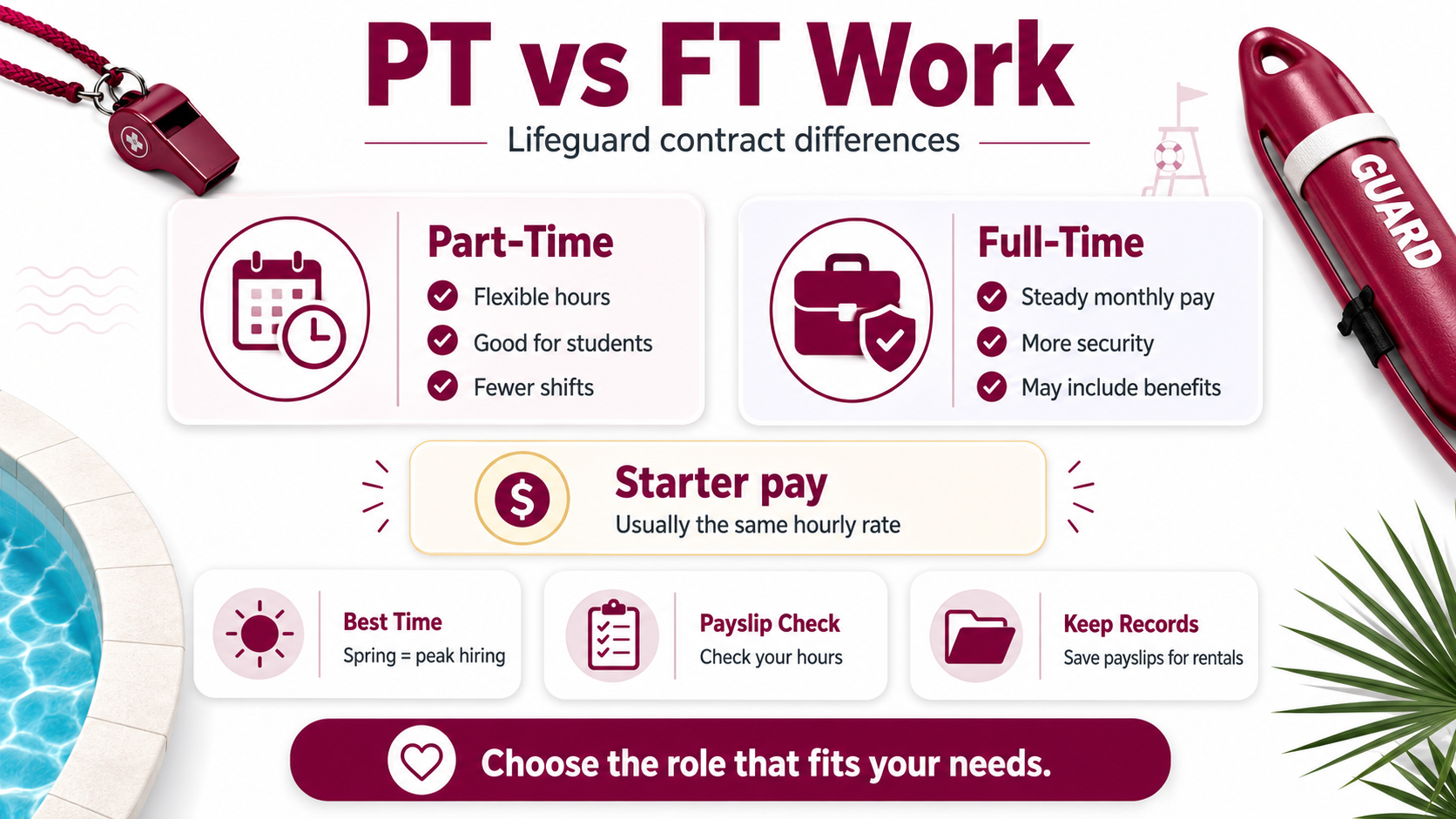
Choosing between full-time and part-time lifeguard work depends on your lifestyle. Full-time roles offer a steady monthly salary and more financial security. Part-time roles give you flexibility, especially if you are studying or need fewer hours.
Both usually pay the same hourly rate for beginners. Full-time staff may get extra benefits in some workplaces. Think about your income needs and schedule before deciding. Both options help you gain valuable experience in the job.
- Spring is the peak season for new lifeguard job openings.
- Always check your payslip for any errors in your hours.
- Keep your payslips organised to help with future apartment rentals.
- Select a position between part-time and full-time based on your personal needs.
How Can You Move into a Higher-Paying Management Role?
Lifeguarding is a fantastic stepping stone to a long-term management career. After you gain some experience, you can apply for a team leader role. Team leaders supervise the pool area and manage the daily rotas. This position comes with more responsibility and a higher hourly wage.
Furthermore, you can work your way up to becoming a duty manager. Duty managers look after the whole leisure centre and earn even more money. Some senior managers in large centres earn over £30,000 every year. You should show your boss that you are reliable and hard-working. Always arrive on time and follow all the safety rules perfectly.
Is Becoming a Lifeguard a Good Financial Choice Today?
Starting a career at the pool is a very smart financial move. The pay for lifeguard work is competitive and stays steady throughout the year. You earn a fair wage while performing a service that helps your local community. In addition, you gain life-saving skills that are very rare and respected.
You have many chances to increase your income through training and overtime. The extra benefits, like free gym use, add a lot of value to your life. You will work in a fun team and make many new friends. Consequently, every day at work feels rewarding and exciting. It is a brilliant job for anyone who wants a stable and active career.
Final Thoughts
Overall, pay for lifeguard roles in the UK provides a reliable income for those starting. Most lifeguards earn about £11.23 per hour, with higher wages available in London and some private facilities. Extra earnings can come from overtime, holiday shifts and workplace benefits. As skills and experience grow, pay often increases as well. The salary for lifeguards can also vary by location and qualifications. For many people, lifeguarding offers a stable career path with good opportunities to increase earnings over time.
FAQs
1. How much do UK lifeguards get paid?
- UK lifeguards usually earn around £11.23 per hour.
2. What jobs pay 500 pounds an hour?
- Very few jobs pay £500 an hour, mostly top doctors or CEOs.
3. What jobs pay $4000 a month in the UK?
- Many skilled jobs, like nurses, teachers and tradespeople, can earn this amount.
4. How much does a 17 year old lifeguard get paid?
- A 17-year-old lifeguard usually earns the same entry-level hourly rate, around £11.
5. Who is the highest paid lifeguard?
- Senior lifeguards in private resorts or managers earn the highest pay.
6. What jobs pay 40 an hour in the UK?
- Jobs like electricians, plumbers and IT specialists can pay around £40 per hour.
7. Is 22 too old to be a lifeguard?
- No, 22 is a perfect age to start or continue lifeguard work.
8. Is 25k a low salary in the UK?
- £25k is a basic but acceptable starting salary in many UK jobs.