
No products in the cart.
Wondering how to become a dental nurse? You get a trainee job at a dental practice, study a GDC-approved course while you work, then register with the General Dental Council. Most people finish in about two years. You don’t need a degree, and you earn a wage from your very first day.
This guide breaks the whole thing into steps. You’ll see the training, the pay, skills and the daily work. By the end, you’ll know exactly what to do next. So let’s get you started on a job that helps real people every day.
What does a dental nurse really do?
A dental nurse helps the dentist treat patients safely. So the dental nurse role mixes hands-on care, cleaning, and a bit of admin. You pass tools, you keep the room clean, and you settle nervous patients. That’s the short answer to what dental nurses do.
People sometimes ask what is a dental nurse in simple terms. Think of the dentist’s right hand. The dentist works on the teeth, and you keep everything moving.
You’ll also greet patients and update their records. Some days feel calm. Other days fly by. That mix is why so many nurses say they never get bored.
How to become a dental nurse: the simple steps
Here’s the route most people take. You apply for a trainee role and you study a GDC course alongside the job. Then you register once you pass. The National Careers Service says on-the-job training is the most common way in.
Follow these steps and you’ll get there:
- Find a “trainee dental nurse” job at a local practice
- Enrol on a GDC-approved course with your employer’s help
- Build a portfolio of real clinical tasks as you work
- Sit your written and practical exams
- Register with the General Dental Council to qualify
Plenty of people manage this around family life. So if you’re juggling other things, don’t let that stop you.
What qualification will you need?
You must hold a qualification that the GDC accepts. The two common ones are the Level 3 Diploma in Dental Nursing and the NEBDN National Diploma. Both lead straight to registration once you pass.
The good news is the entry bar is fair. According to the National Careers Service, an advanced apprenticeship usually asks for five GCSEs at grades 9 to 4, including English and maths.
You don’t need science A-levels. You don’t need a degree. A caring attitude and a willingness to learn matter far more here. So a fresh start is very possible.
How long does the training take?
Most people qualify in about one to two years. The exact time depends on your hours and how fast you finish your portfolio. Part-time learners take a little longer, and full-time trainees move quicker.
The GDC expects you to be studying toward a recognised qualification within two years of starting work. So you can’t stay an untrained trainee forever.
Two years is short for a real healthcare career. Many jobs need three or four years of study with no pay. Dental nursing pays you the whole way through, which helps a lot.
Is an apprenticeship a good route in?
Yes, an apprenticeship is one of the clearest ways in. You work in a real practice, earn a wage and study toward a Level 3 dental nurse qualification at the same time. The course is GDC-approved, so it leads to registration.
You’ll find vacancies on the gov.uk “Find an apprenticeship” service and on NHS Jobs. Large groups like Bupa Dental Care run their own schemes too.
It’s a busy mix of study and shifts. But you come out with real experience, a wage in your pocket, and no tuition debt. That trade is worth it for most people.
What does GDC registration mean for you?
The General Dental Council, or GDC, is the body that regulates dental staff in the UK. You cannot legally work as a qualified dental nurse without joining the register. Once you pass your exams, you apply and pay a yearly fee.
Why does this matter? It keeps patients safe and proves you’ve met the national standard.
Trainees don’t need to register while they study. So you work as a trainee first, then register the day you qualify. After that, you do a little training each year to stay on the register and keep your skills sharp.
How to become a dental nurse without a degree
This is the part many people love. You do not need a university degree to become a dental nurse. You learn the job inside a real clinic, with a mentor beside you and a tutor for your studies.
Some people also search for how to become a dental assistant. In the UK, that’s usually the same job, so the steps match.
You’ll pick up clinical skills by doing them, not just reading about them. So even if you left school years ago, you can still start. Employers care more about effort than grades.
What skills do good dental nurses share?
The best dental nurses are calm, kind, and well organised. Most of these dental nurse skills have nothing to do with teeth. They’re about people.
Here’s what helps you shine:
- A warm, calm manner with worried patients
- Clear talking and good listening with the whole team
- Tidy habits, since hygiene rules are strict
- Basic computer skills for patient records
In our experience, the people who do best simply enjoy helping others. The clinical bits can be taught. A kind nature is the part you bring yourself, and patients feel it straight away.
What are the main duties and responsibilities?
Your day is busy and varied. The role of a dental nurse covers patient care, cleaning, and admin all at once. Health Careers lists infection control and patient support as two of the main jobs.
A typical dental nurse job description and set of dental nurse duties and responsibilities looks like this:
- Giving chairside support during treatment
- Mixing materials and passing instruments
- Sterilising tools after every patient
- Keeping clear patient records
- Helping at reception and booking appointments
Your dental nurse responsibilities shift through the day to keep things moving. That variety keeps the work fresh.
How much do dental nurses get paid?
Pay is steady and fair. NHS dental nurses sit on Band 3 or Band 4 of the Agenda for Change scale. According to the National Careers Service most qualified nurses earn roughly £25,000 to £30,000 a year.
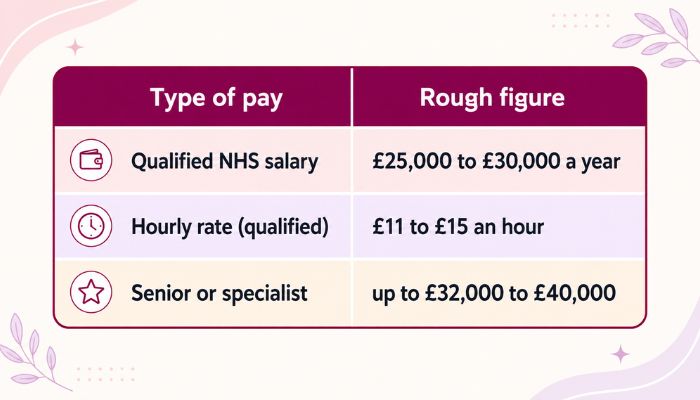
Private practices often pay a little more. The most recent NHS pay deal also raised Agenda for Change salaries by about 3.6%. So your pay climbs as your skills and years grow.
Where can you work as a dental nurse?
Dental nurses aren’t stuck in one type of clinic. You could work in a high street practice, an NHS hospital, a community health centre, or a specialist clinic. Some even work in prisons or with the armed forces.
This gives you real choice. Fancy a quiet village surgery? Or a busy city hospital? Both need good dental nurses.
It also means you can move around the country and still find work. The NHS reports steady demand for dental staff. So jobs tend to be there when you need them, which is a comfort.
Can a dental nurse become a dentist?
Not straight away. The honest answer to can a dental nurse become a dentist is yes, but only with a lot more study. You’d need a dental degree, which takes around five years at university.
The better news is the roles in between. With extra training, you could become a dental hygienist or a dental therapist. You might train as an orthodontic therapist, helping straighten teeth.
So nursing isn’t a dead end at all. Many people use it as their first step. You learn the trade from the inside, then climb as far as you like.
What if you trained outside the UK?
If you qualified abroad, you can still work here through the GDC’s overseas route. You’ll send an application, prove your English meets the set standard, and provide a Certificate of Good Standing from your home regulator.
One thing catches people out. GDC registration alone does not give you the right to work in the UK. If you’re not a UK or Irish national, you’ll also need the correct visa. The paperwork takes patience, with forms, ID, and proof of address all needed. Take it step by step, though, and it’s very doable.
Should you go for it?
If you like helping people and enjoy a busy day, dental nursing fits you well. You’ll work in a friendly team, meet new faces daily and build a stable career without years of debt. It isn’t always easy. Some patients are anxious, and the day can move fast.
But if you’re caring, calm, and happy on your feet, this could be your job. Now you know how to become a dental nurse in the UK. So, your next move is simple. Search for a trainee role or a Level 3 apprenticeship near you, and apply today.
Frequently asked questions (FAQs)
1. How long would it take to become a dental nurse?
- Most people qualify in about one to two years, depending on your hours and how quickly you finish your work portfolio.
2. Is a dental nurse well paid?
- The pay is steady rather than high, with most qualified nurses earning around £25,000 to £30,000, and senior roles reaching more.
3. Do you need a qualification to be a dental nurse?
- Yes, you need a GDC-approved qualification, such as a Level 3 Diploma or the NEBDN National Diploma, then you register with the GDC.
4. What is the salary of a dental nurse in the UK?
- NHS dental nurses usually sit on Band 3 or Band 4 of the Agenda for Change scale, giving roughly £25,000 to £30,000 a year.
5. Is dental nursing a stressful job?
- It can get busy, and calming nervous patients takes energy. But most nurses find the teamwork and variety make it worth it.
6. How much do NHS dental nurses earn per hour?
- Qualified NHS dental nurses earn around £11 to £15 an hour, with trainees starting a bit lower and specialists earning more.